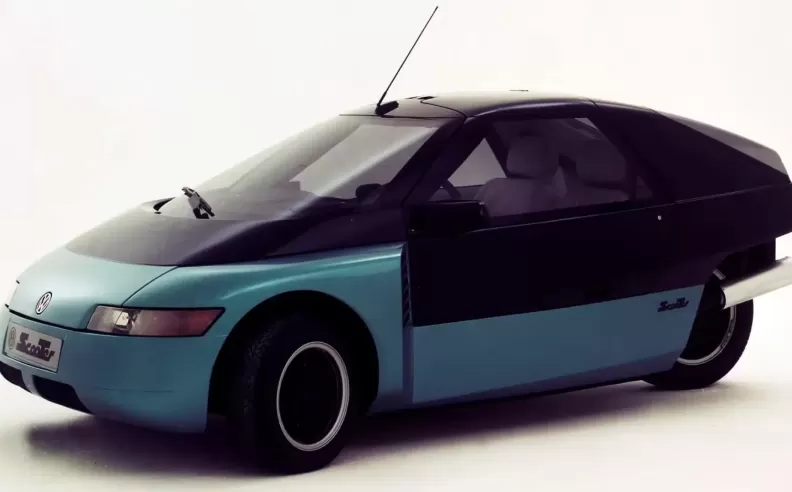
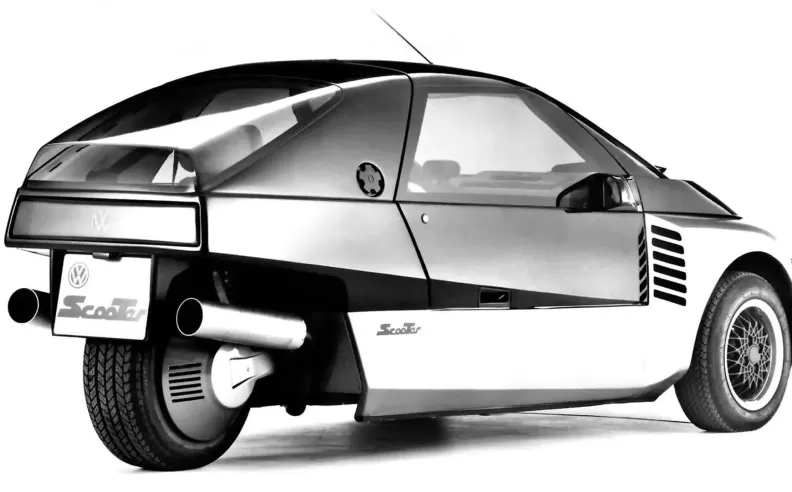
Back in 1986, Volkswagen pulled the wraps off something that looked straight out of a sci fi movie. The Volkswagen Scooter was not just tiny, it was a futuristic mix of motorcycle and microcar, complete with dramatic gullwing doors. While it never made it to showrooms, the Scooter showed just how far German engineers were willing to push the boundaries of efficiency and design before electric cars were even a thing.
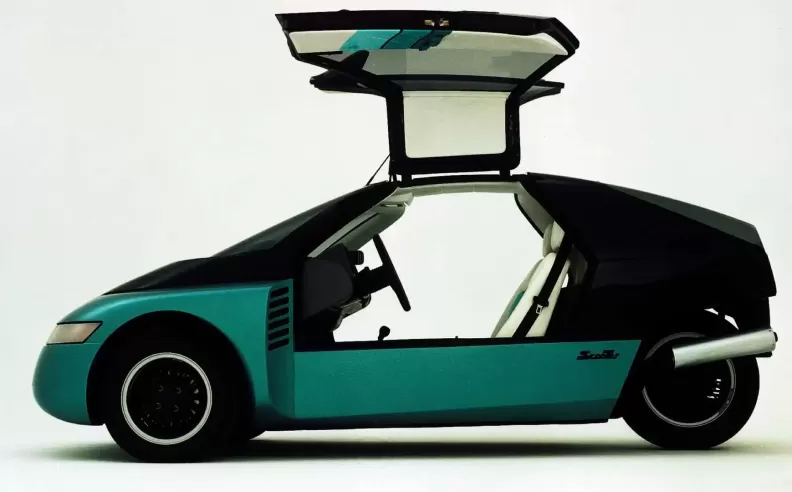
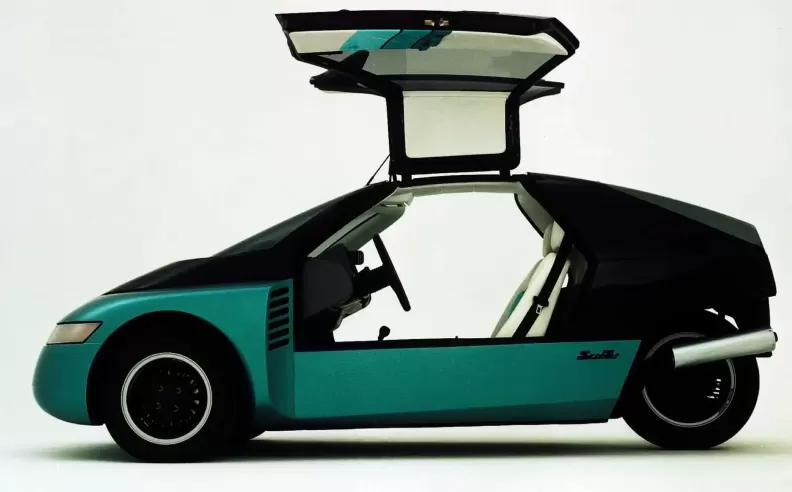
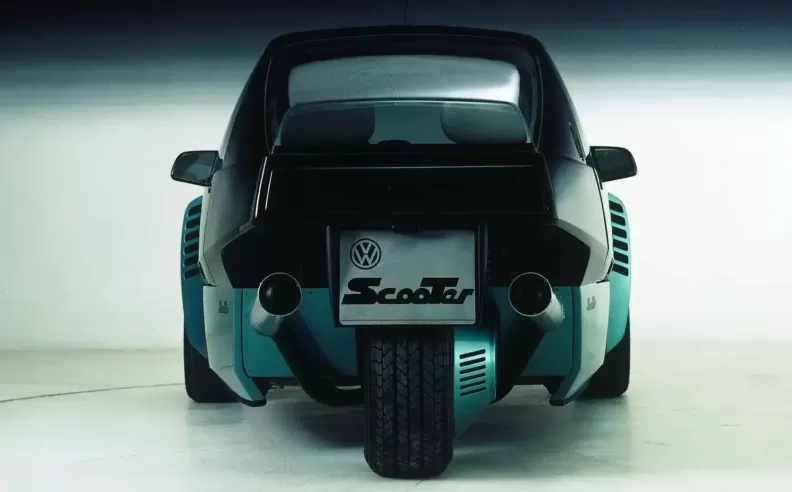
Debuting at the Geneva Motor Show, the Volkswagen Scooter was all about breaking conventions. Its three wheel layout and streamlined teardrop shape gave it standout aerodynamic efficiency. Despite its super compact size, at just 3,175 millimeters long, it managed to feature iconic gullwing doors, making it the world’s smallest car to ever use such a system, ahead of production oddities like the Mazda Autozam AZ 1. Volkswagen went even further, letting drivers fully remove the rear window and even detach the doors (by releasing the gas struts) to transform the Scooter into a nearly open top ride, almost like a motorcycle with a car’s comfort.
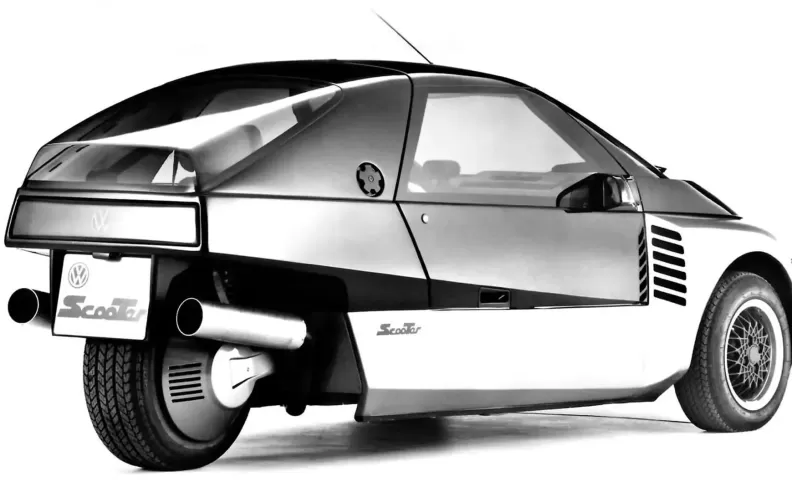
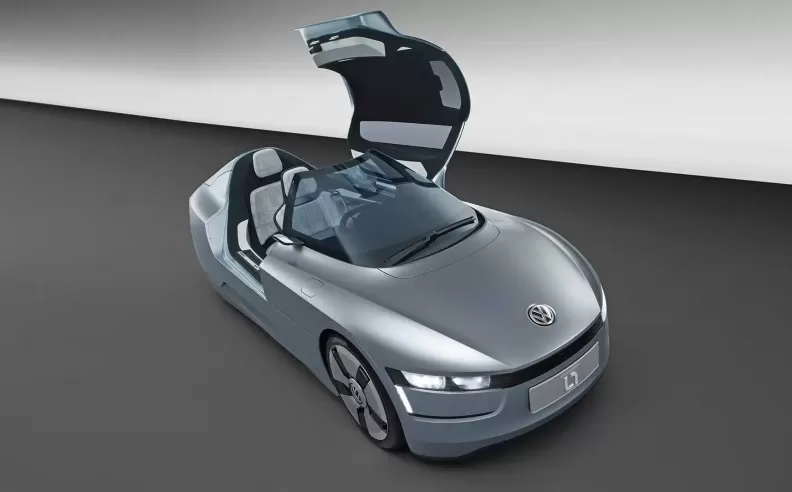
Under the hood, the Scooter borrowed its engine from the Polo, a naturally aspirated 1.1 liter four cylinder making 40 horsepower, paired with a four speed manual transmission driving the front wheels. With an ultra light curb weight of just 550 kilograms, it hit 160 kilometers per hour and could sprint from zero to 100 kilometers per hour in under 15 seconds. Volkswagen even built a sportier version with a 1.4 liter engine putting out 90 horsepower, which pushed the tiny three wheeler to a wild 220 kilometers per hour. Despite the speed, the focus was efficiency: thanks to its drag coefficient of just 0.25 and careful weight distribution, the Scooter sipped only 3.9 liters per 100 kilometers at a steady 90 kilometers per hour, a figure that beat most cars of the era and foreshadowed the brand’s later hyper efficient concepts.

Started my career in Automotive Journalism in 2015. Even though I'm a pharmacist, hanging around cars all the time has created a passion for the automotive industry since day 1.



 SHARE
SHARE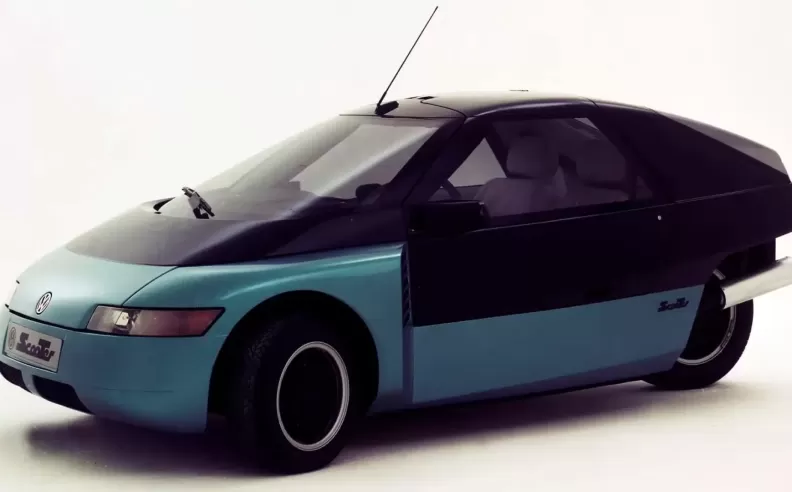
 SEE FULL GALLERY