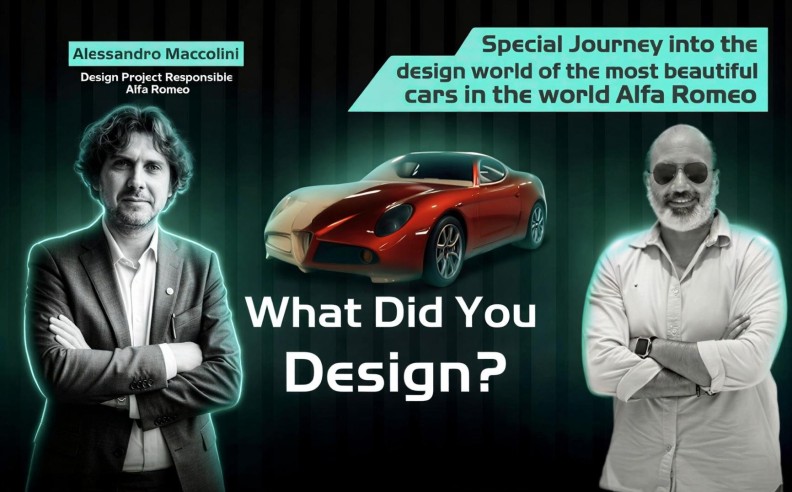

In this special Motor283 episode, we skip the usual question about what someone drives and switch to something far more fascinating: what they designed. Inside the Alfa Romeo museum in Arese, we sit down with Alessandro Molini, a designer who grew up with the brand, joined Alfa Romeo in 1994, and stayed through decades of projects that shaped how Alfa Romeo looks and feels today. This is not only a tour of cars. It is a tour of culture, identity, and the hidden logic behind every curve and line.

Alessandro says his connection to Alfa Romeo started long before his first day at work. When he was eight years old, he remembers riding beside his father in a classic Giulia, holding a steering wheel from another car and pretending to drive. That moment sparked a lifelong passion. Years later, he entered Alfa Romeo through a one year internship in 1994, then stayed on to become part of the design family. His first major exterior design project was the Alfa Romeo 147, working under Walter de Silva, a period that taught him how Alfa Romeo design must respect the past while still feeling modern and alive.
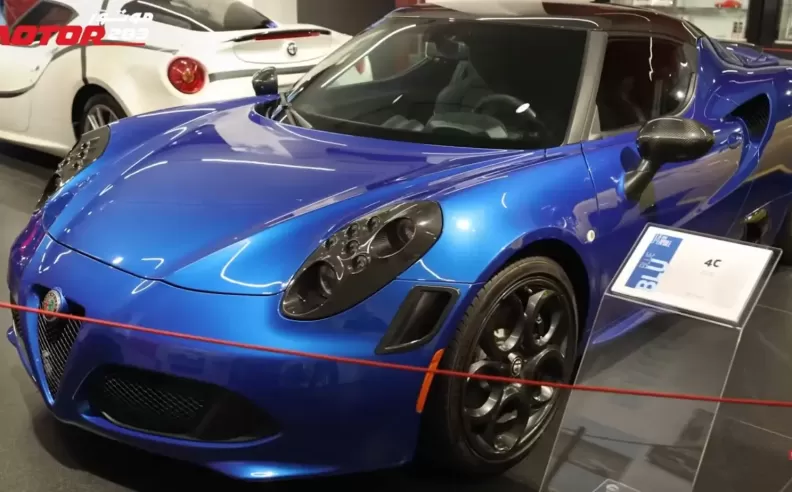
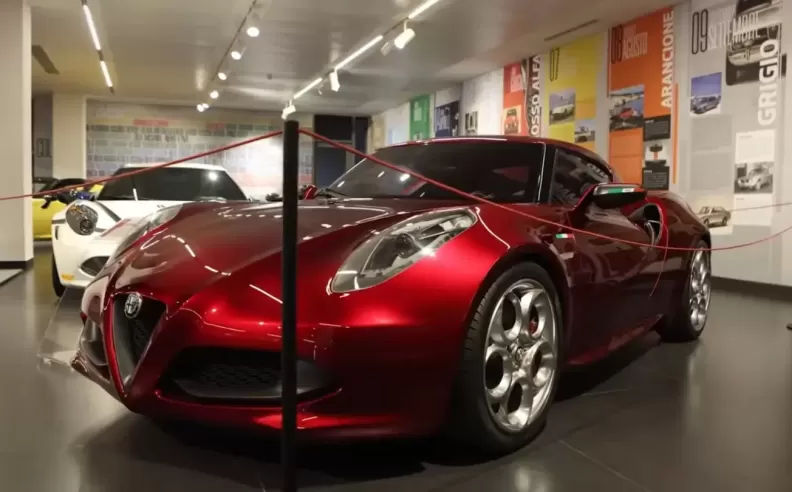
When Alessandro talks about the 4C, he describes a rare situation where the team truly started from zero. The goal was bold: create a small supercar that still feels like a real Alfa Romeo, not through a huge engine, but through smart engineering, lightweight thinking, and a strong design message. The timeline was intense. The concept began at the end of October 2010 and had to be ready for Geneva 2011, meaning the team built it in roughly four months.
What makes the story even more surprising is what happened at the show. The Alfa Romeo leadership publicly shared weight and pricing expectations while the team was still living in the concept world. Later, the production model arrived very close to those numbers, which Alessandro describes as one of the most unexpected and satisfying moments of his career.
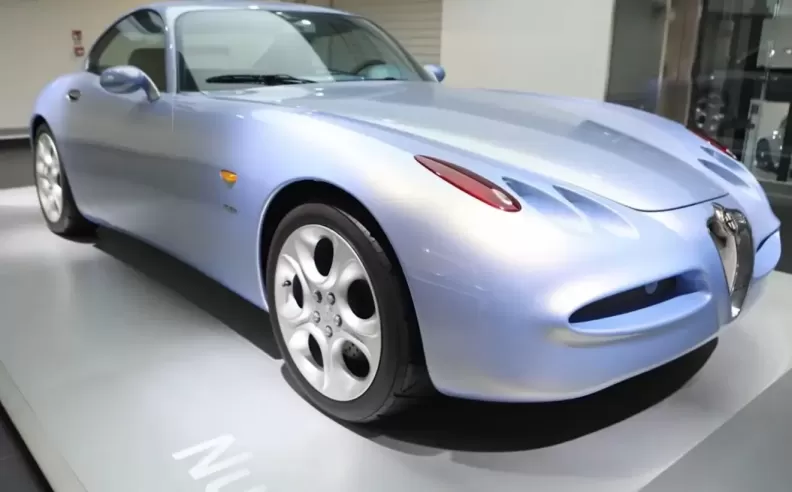
One of the best parts of this interview is how Alessandro explains that many things people call styling are actually engineering decisions with meaning. He points to the concept mirror and explains it was a symbol connected to the 150 year anniversary of the unification of Italy, with a shape that visually carries the Italian flag idea. Then he flips the conversation to pure function.
He explains that some exterior slots and openings are not decorative at all, but fully aerodynamic. Even the color separation line between body paint and black trim is not only an aesthetic decision. It is also about manufacturability, because the roof is one of the first components fitted during assembly, and other parts follow later. For Alessandro, real design means every ingredient must earn its place through function, feasibility, and quality.
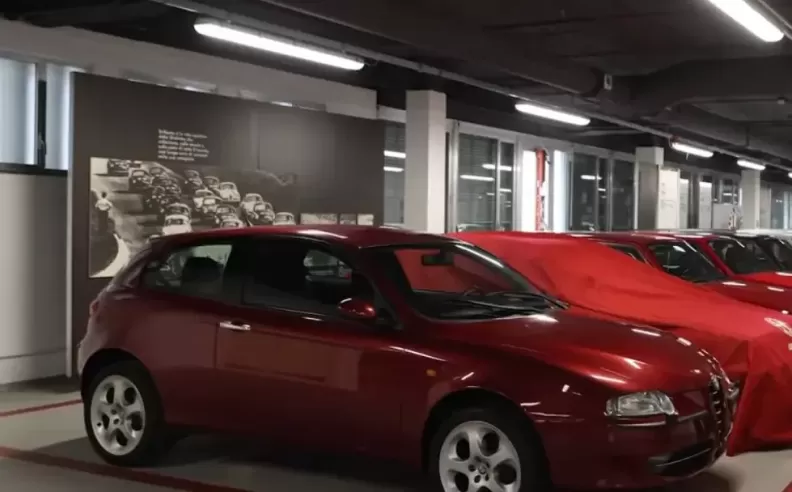
To explain the 147, Alessandro takes us back to a classic model from the 1950s and 1960s and shows how post war design brought richer surfaces and stronger continuity. He describes how older cars had more volume and smoother transitions, and how the 147 intentionally returned to that spirit, moving away from the boxier language of the late 1980s and early 1990s.
He also shares a personal moment that still makes him smile. After months of designing and refining the front end, he once saw a 147 in Milan traffic and felt a sudden shock of pride when he recognized his own work in the real world. For him, the design succeeds when it still looks right years later, not because it is loud or extreme, but because it is balanced, confident, and timeless.
Alessandro is clear that designing a car is not just creativity. It is responsibility. Alfa Romeo has more than a century of history, and every new model must carry that DNA while still meeting market trends, production reality, new regulations, and what fans want. He compares the pressure to football, where everyone has an opinion and mistakes get punished instantly.
He also reminds us that it is never one person alone. There is always a team behind the result, and roles change over time. When discussing projects like the 33 Stradale, he explains that his job focused on managing the full style development journey from concept to feasibility and production alignment. When asked to name a single inspiring beauty icon from Alfa Romeo history, he points to Zagato as a name that can express sportiness, evolution, and elegance in one shape.
Watch the full interview on Motor283 to see the museum walk, the 4C concept details, and the design philosophy that turns Alfa Romeo from a car into a cultural signature.

Started my career in Automotive Journalism in 2015. Even though I'm a pharmacist, hanging around cars all the time has created a passion for the automotive industry since day 1.



 SHARE
SHARE