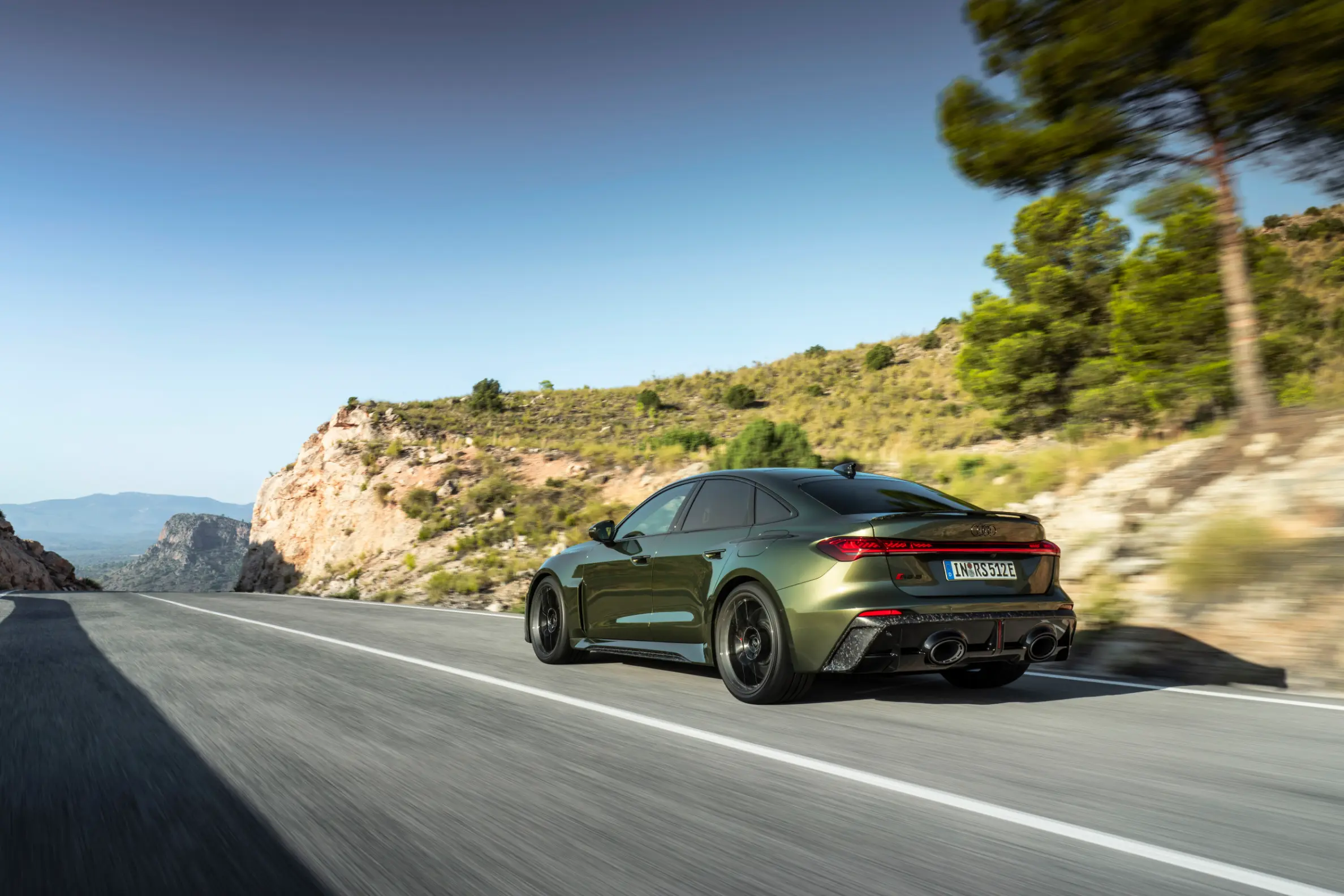
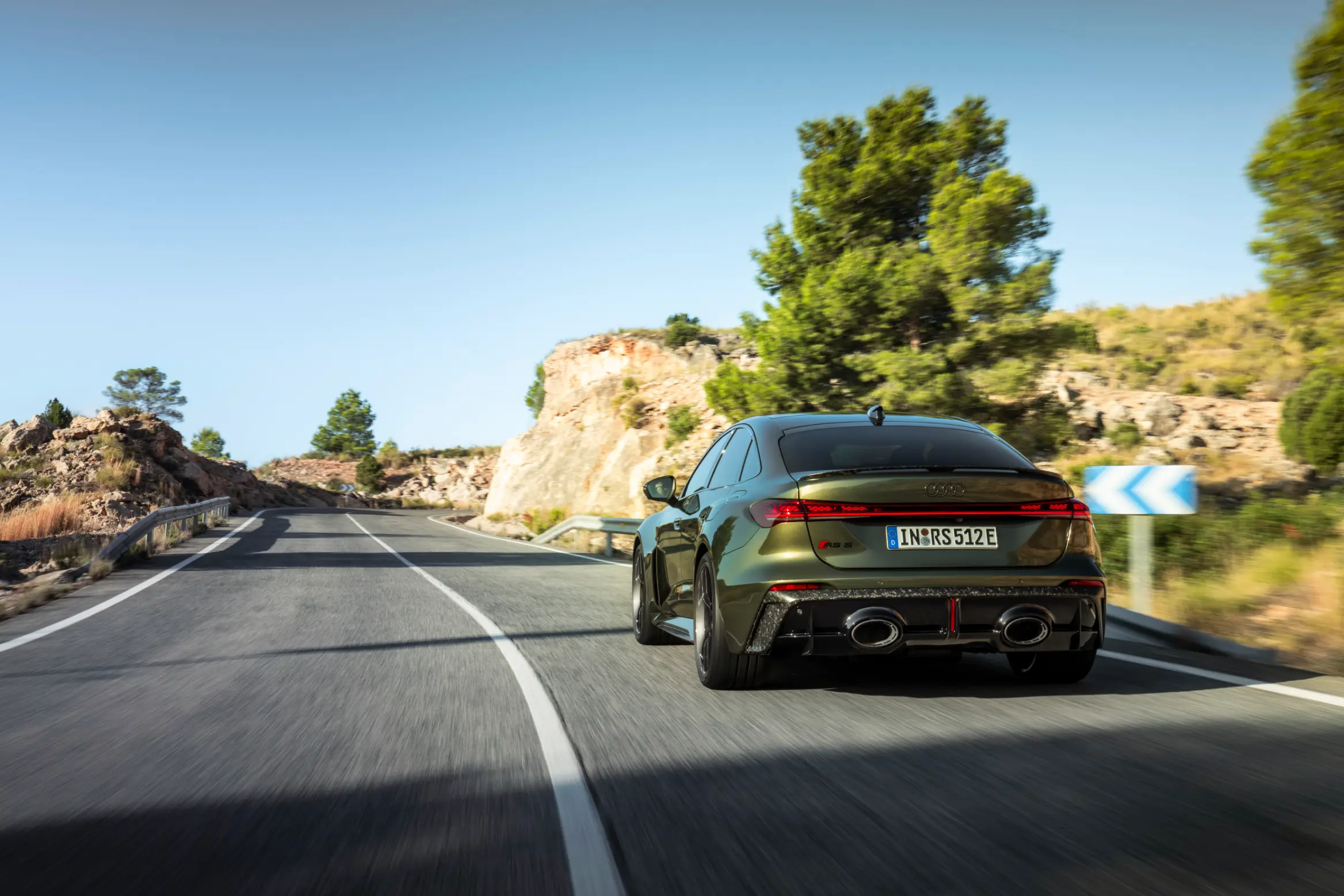
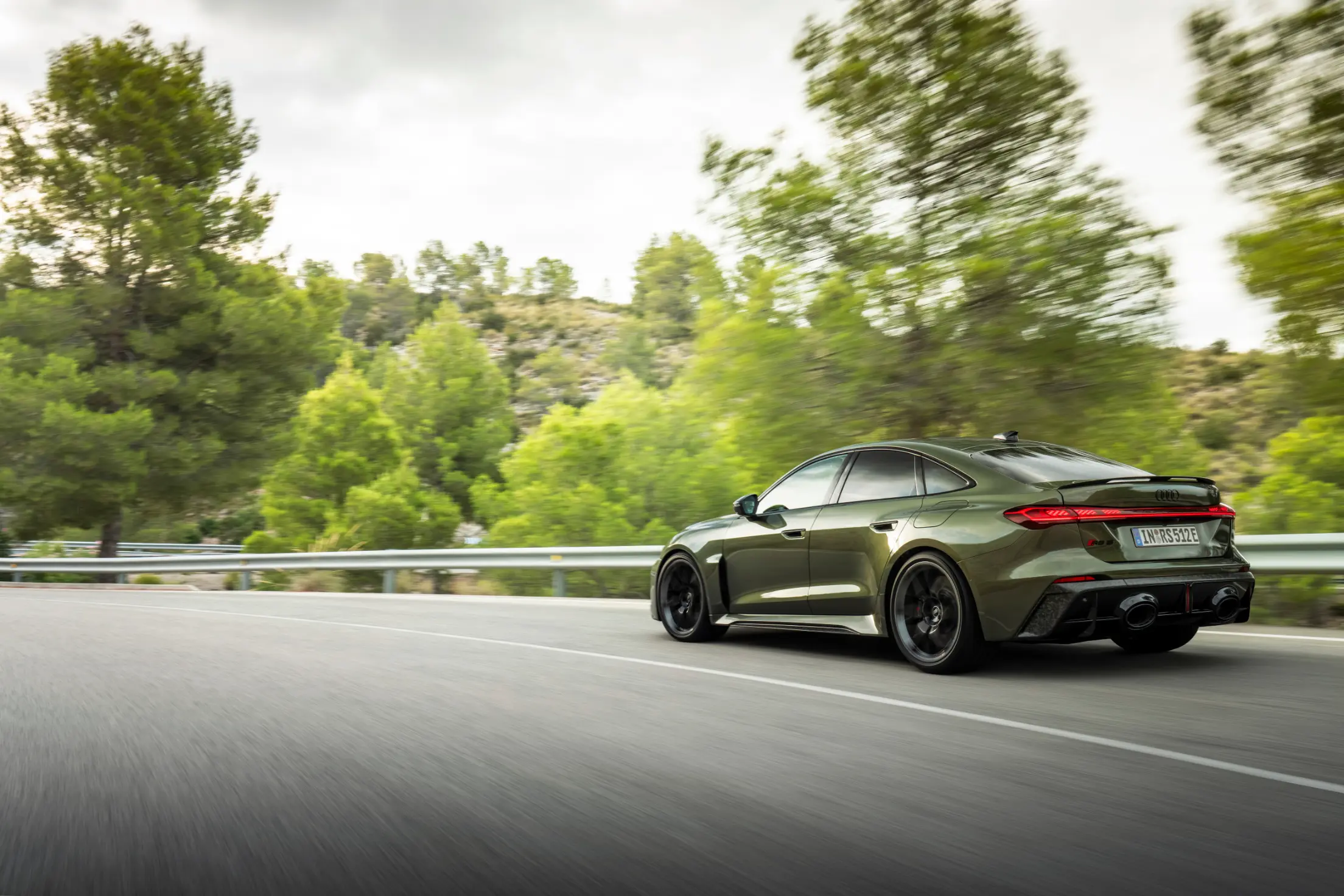
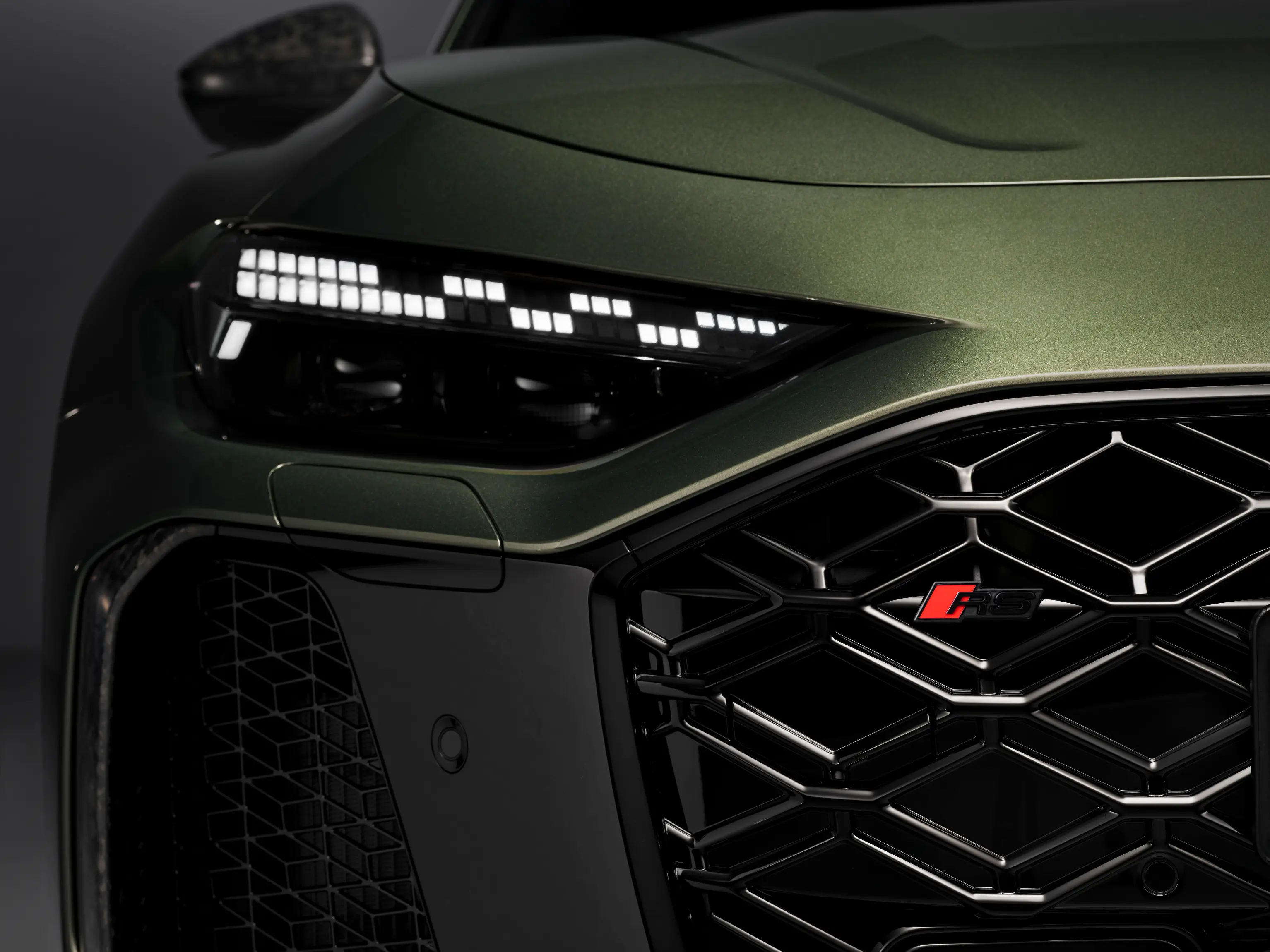
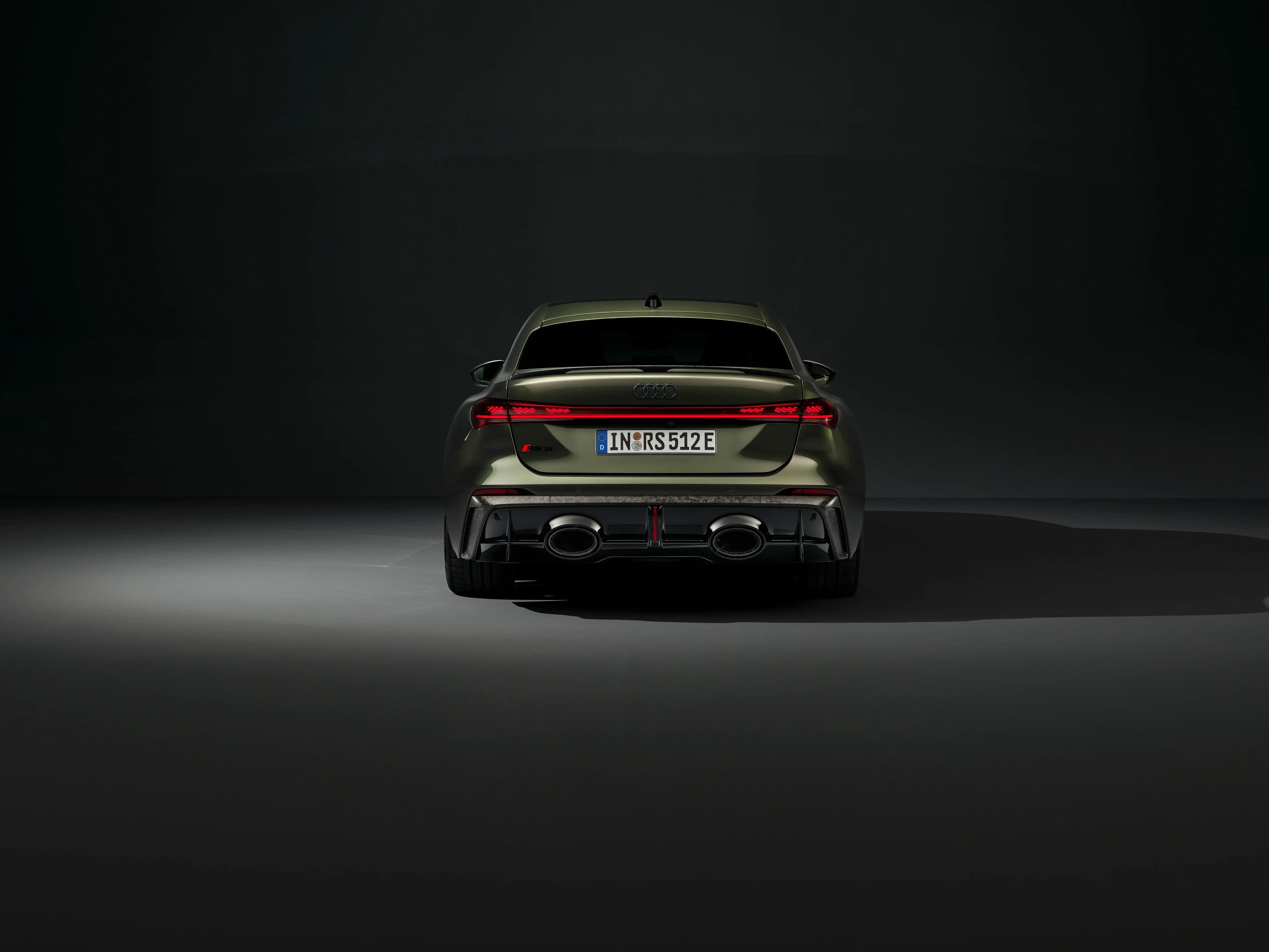
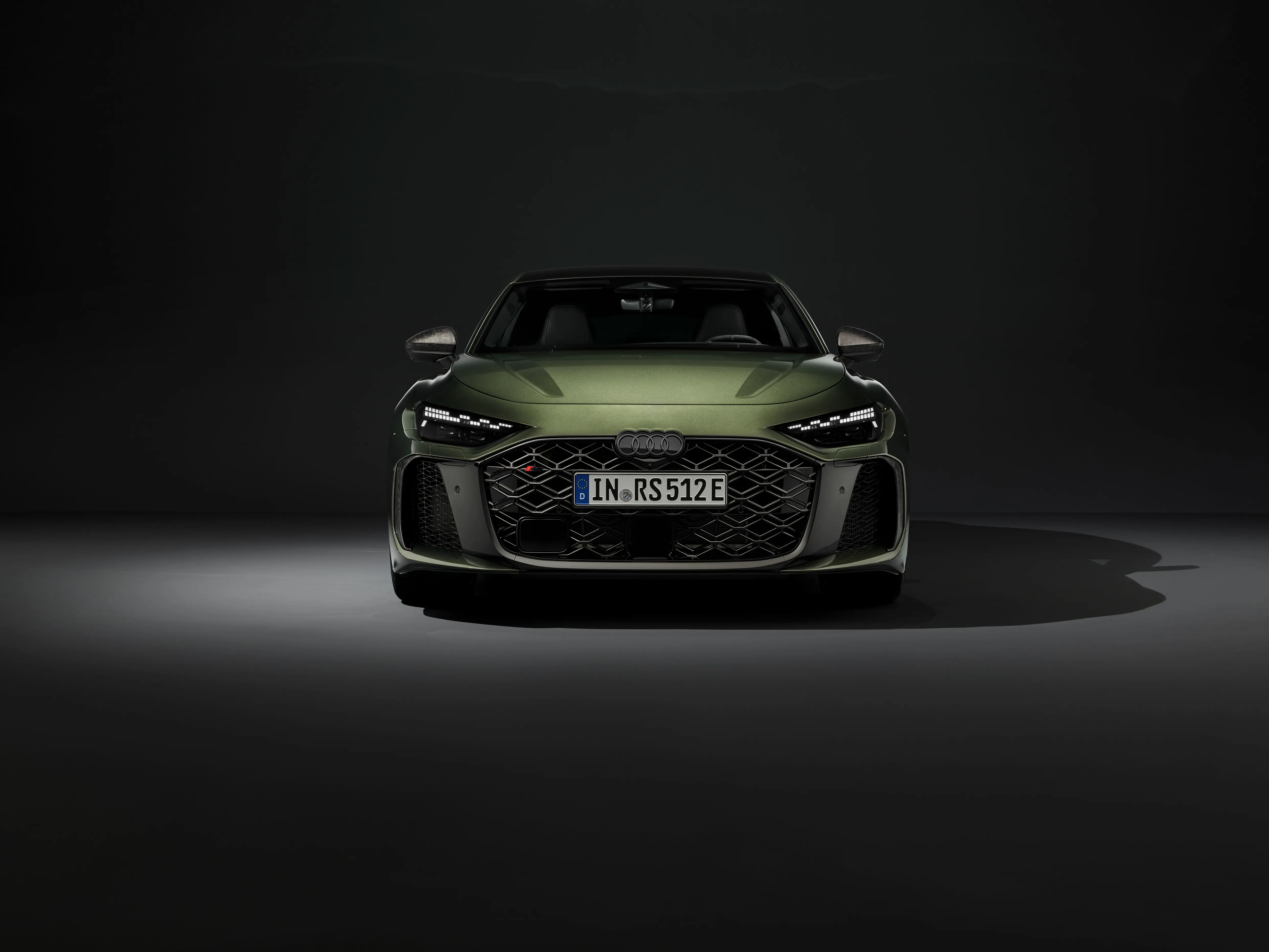
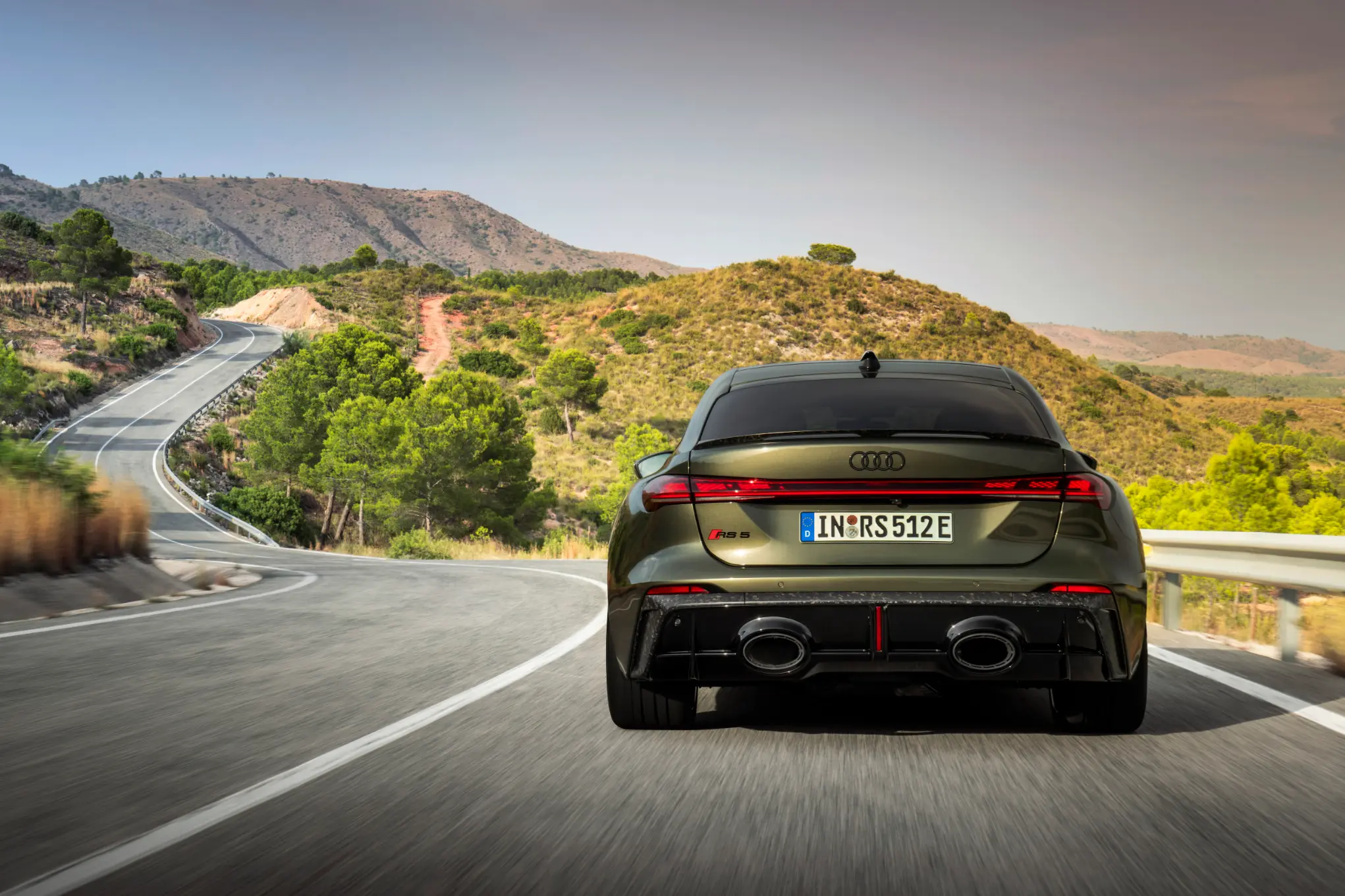
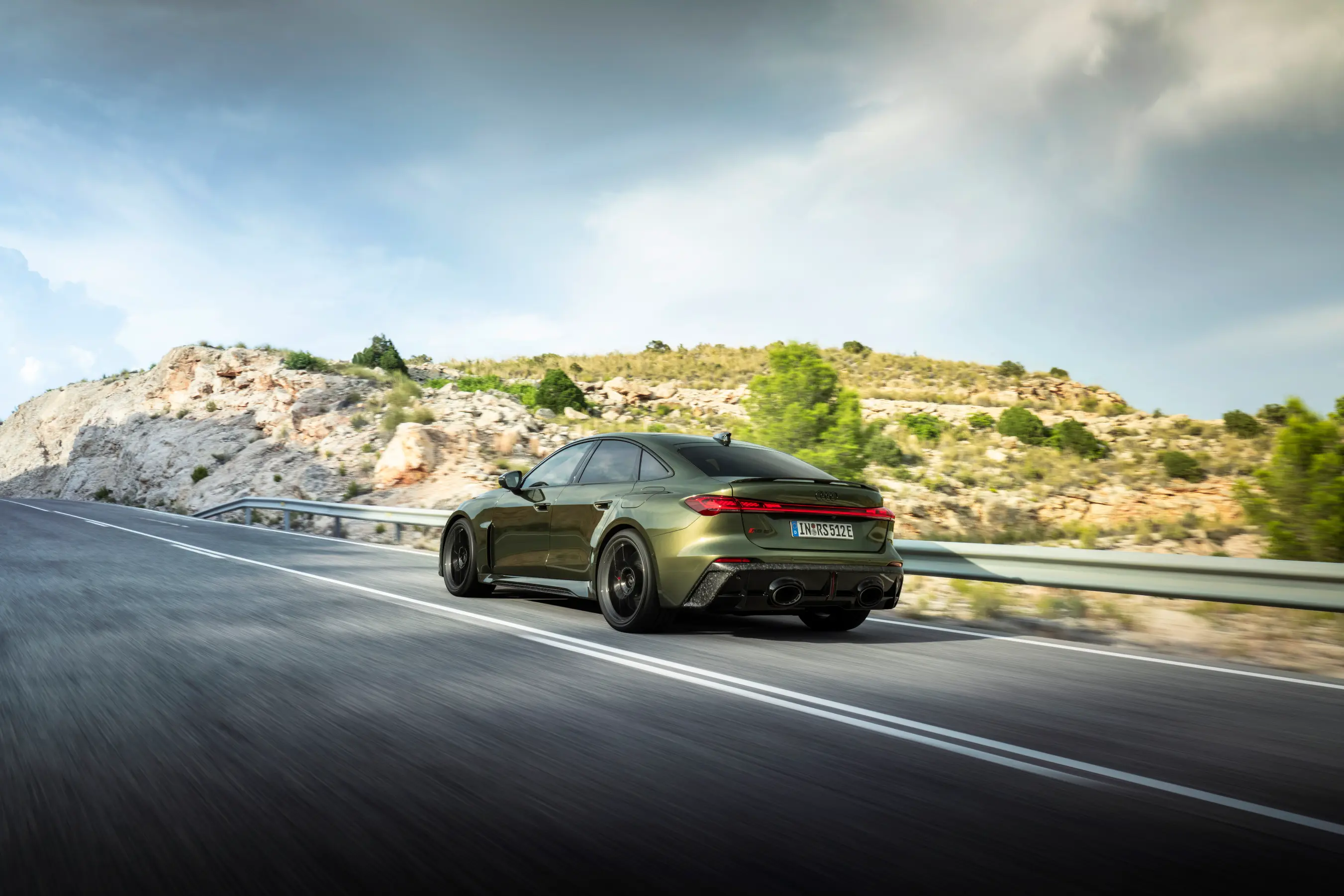
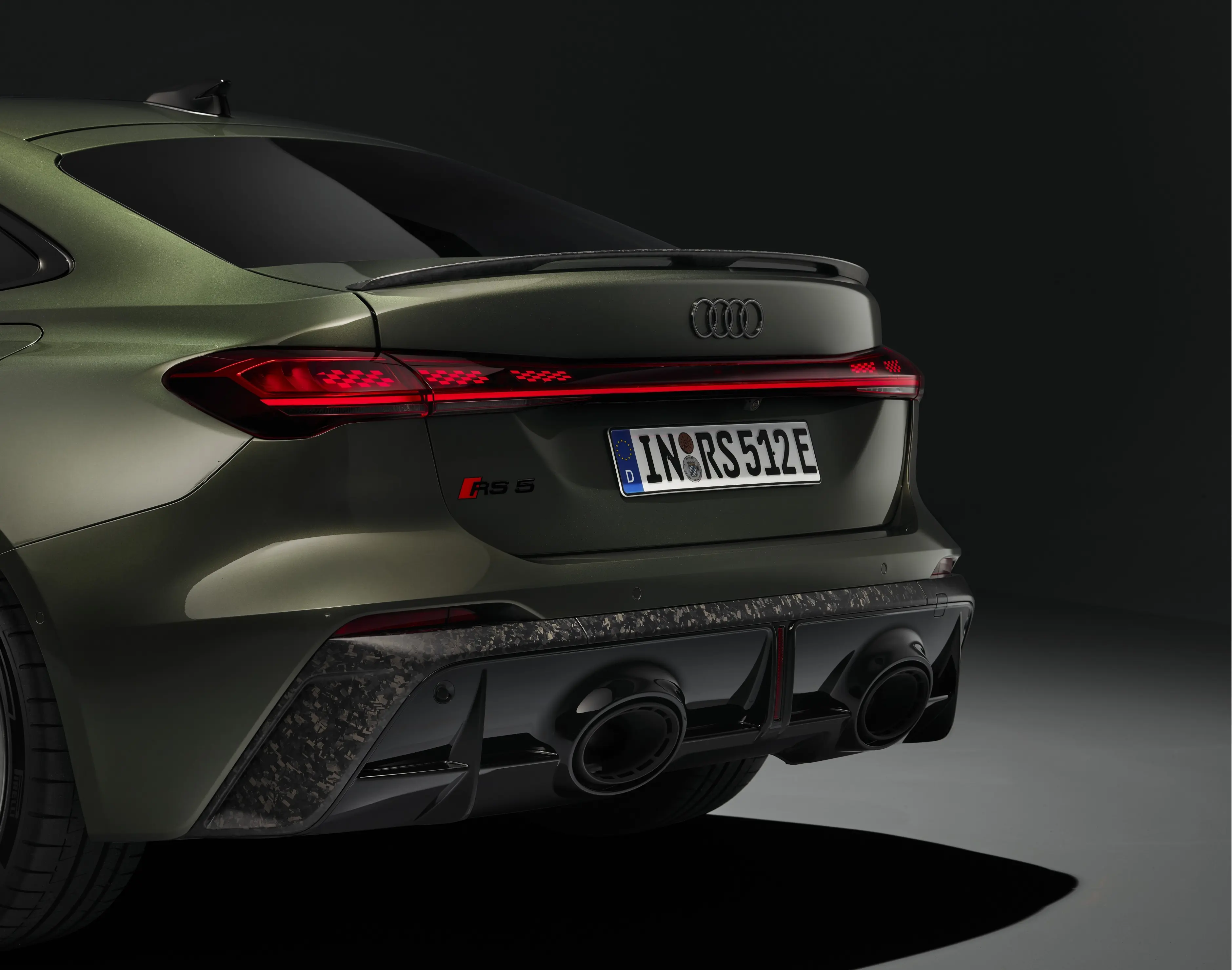
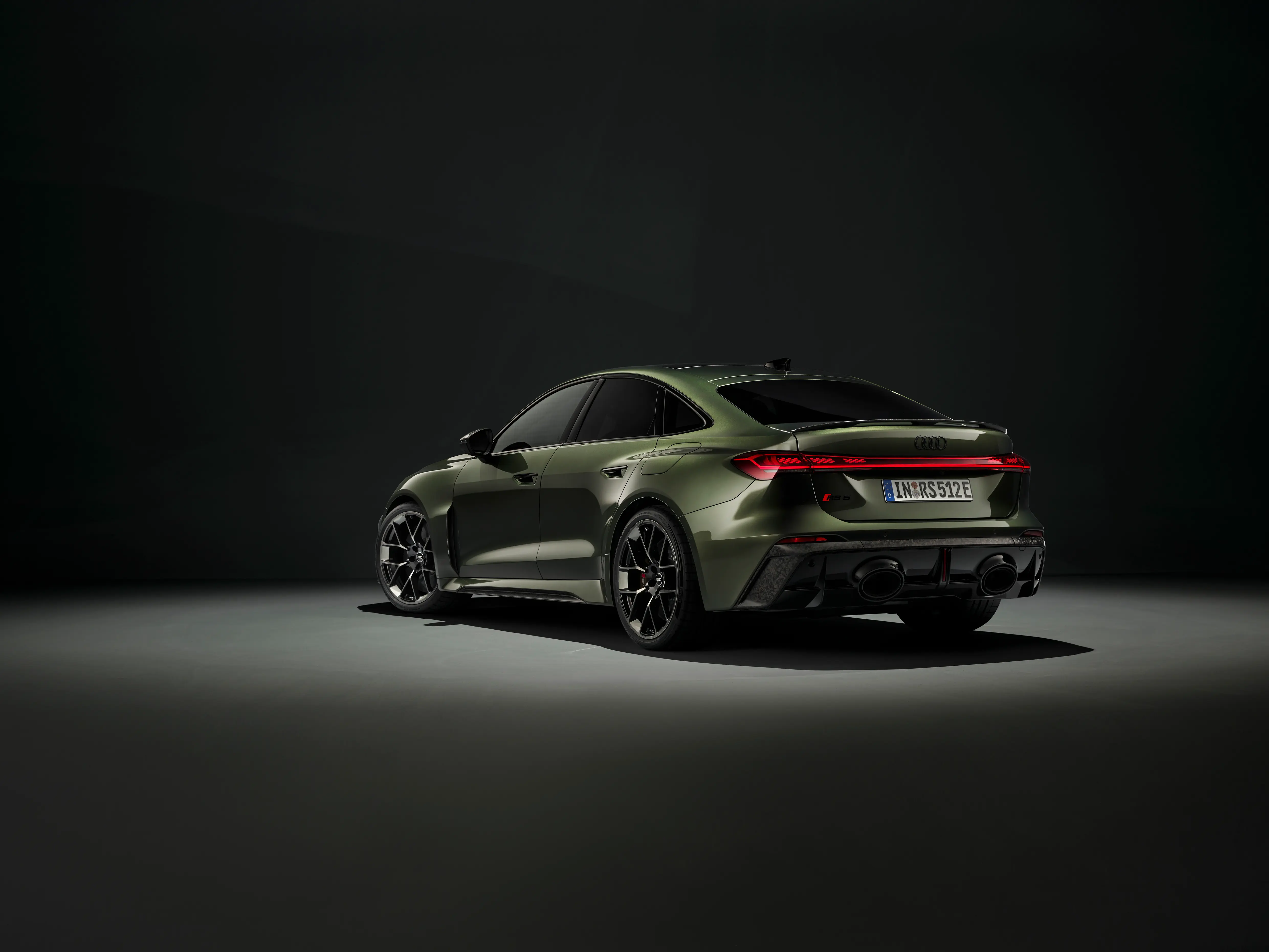
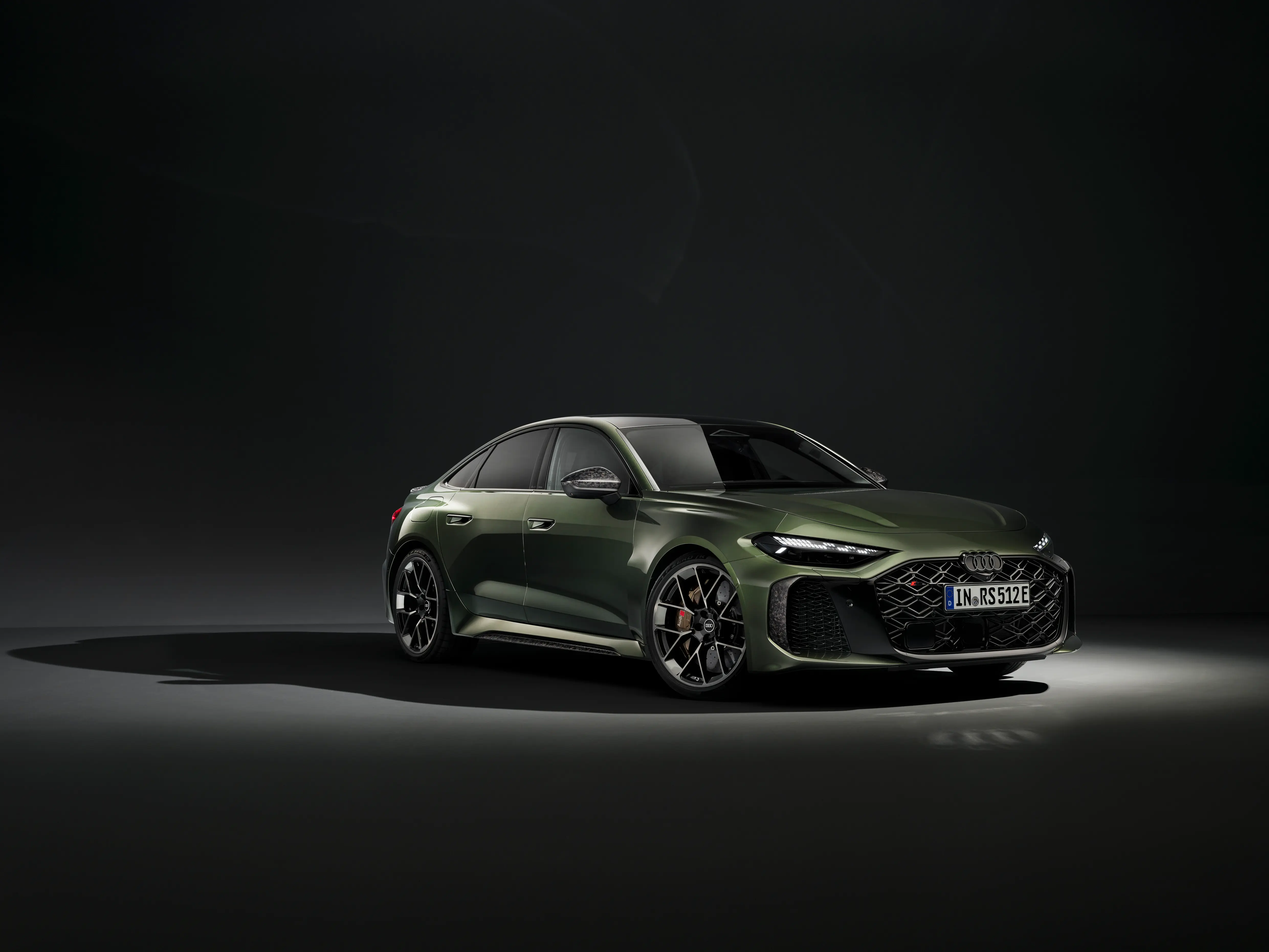
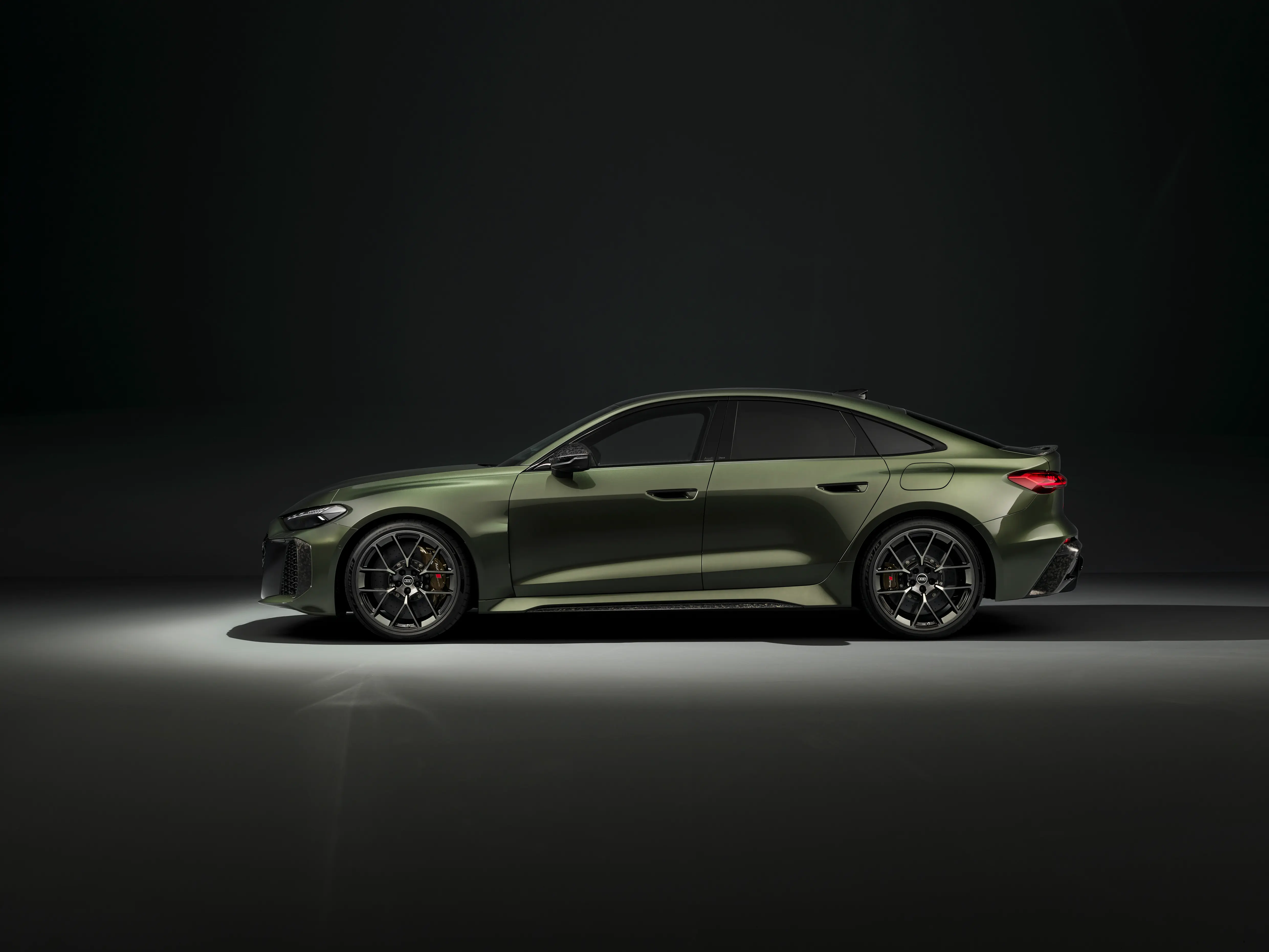
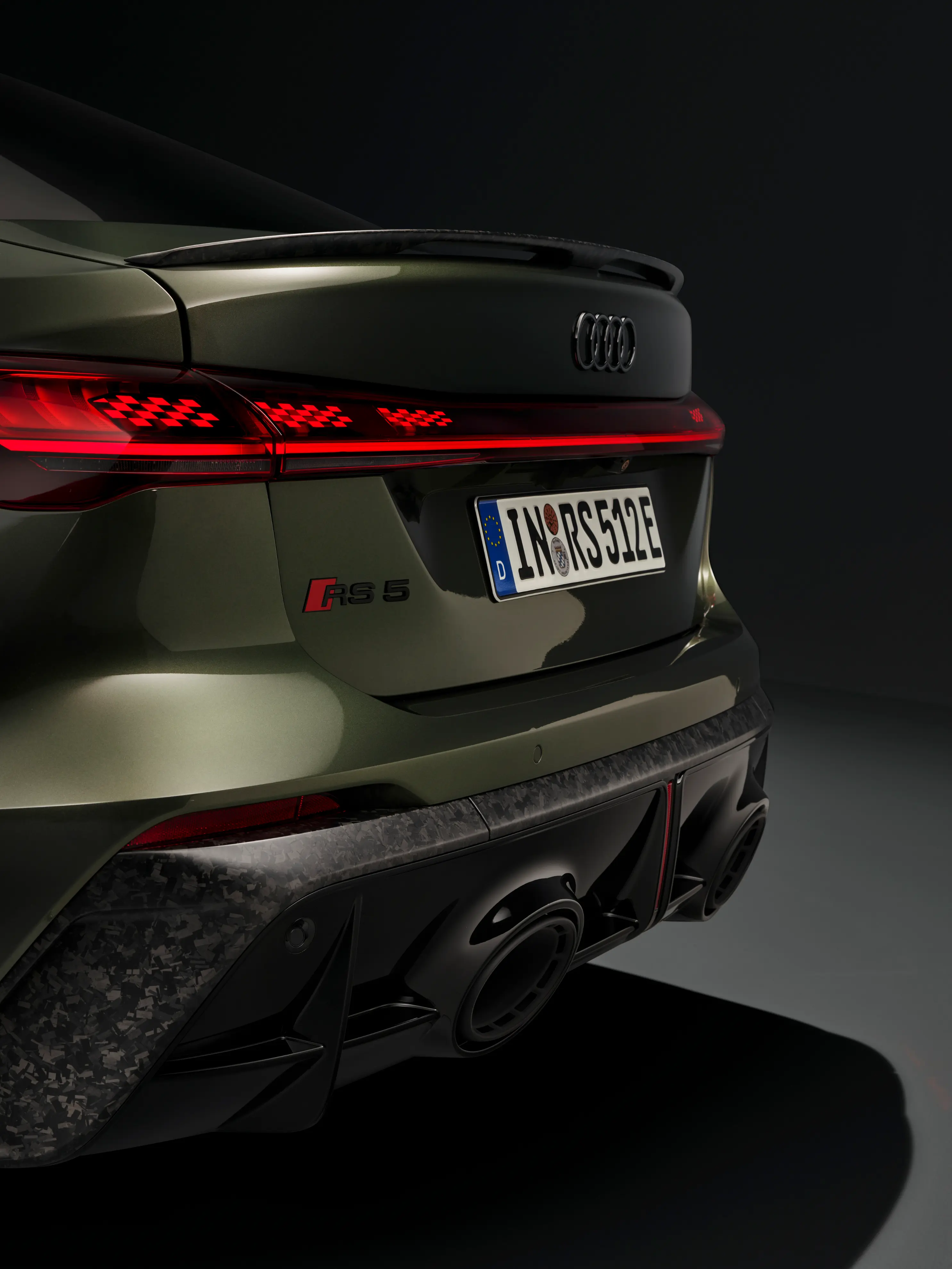
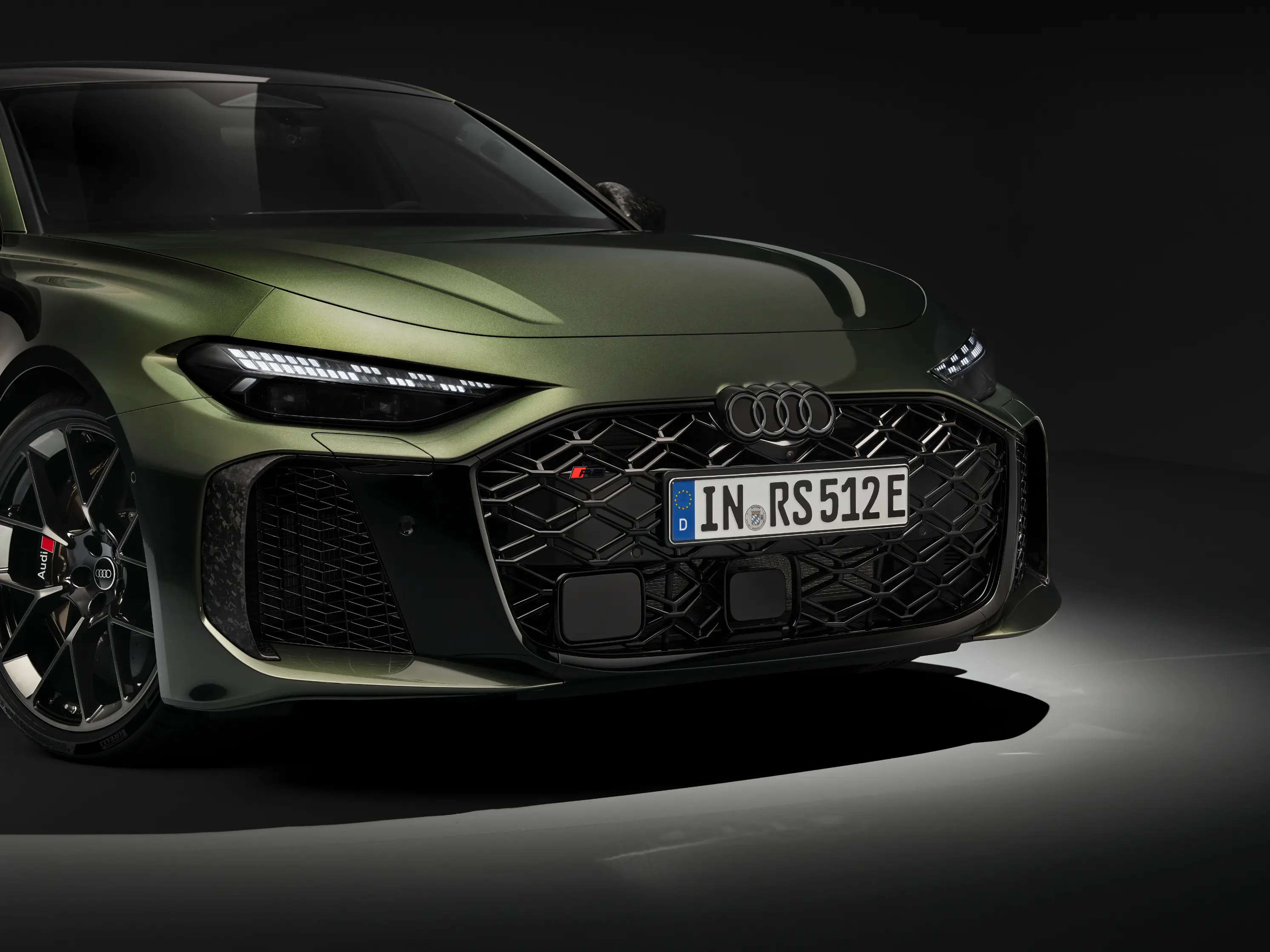
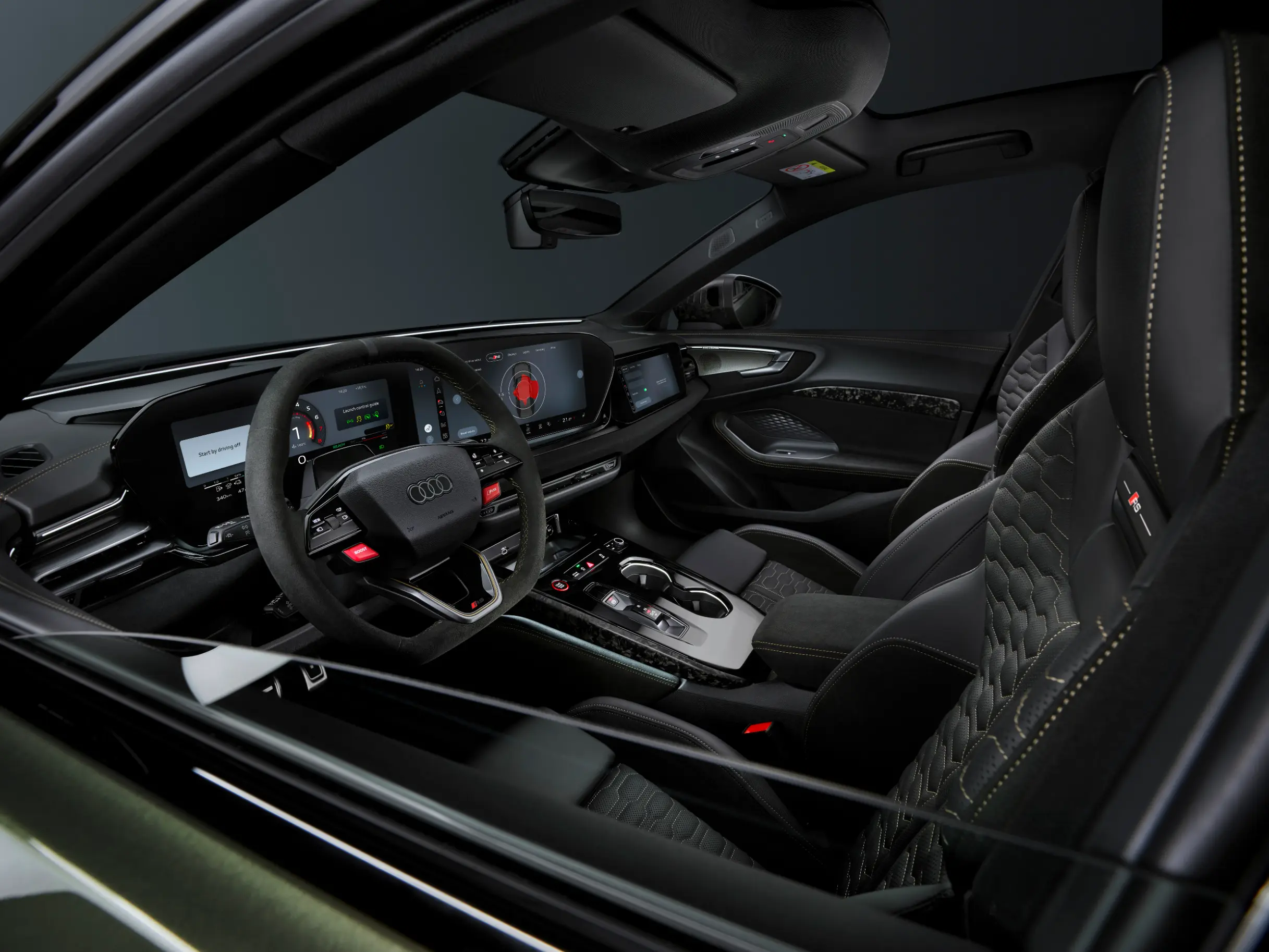
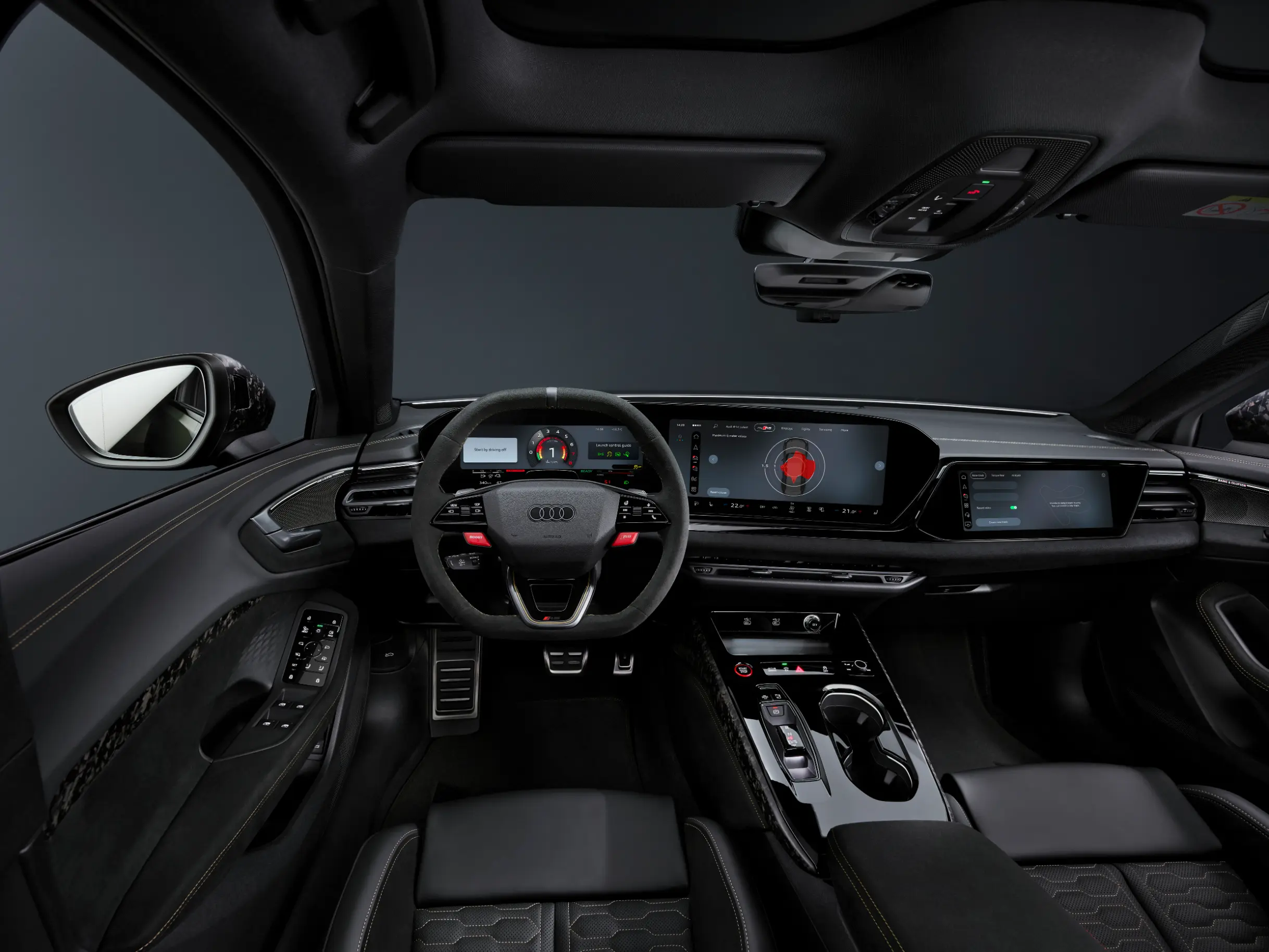
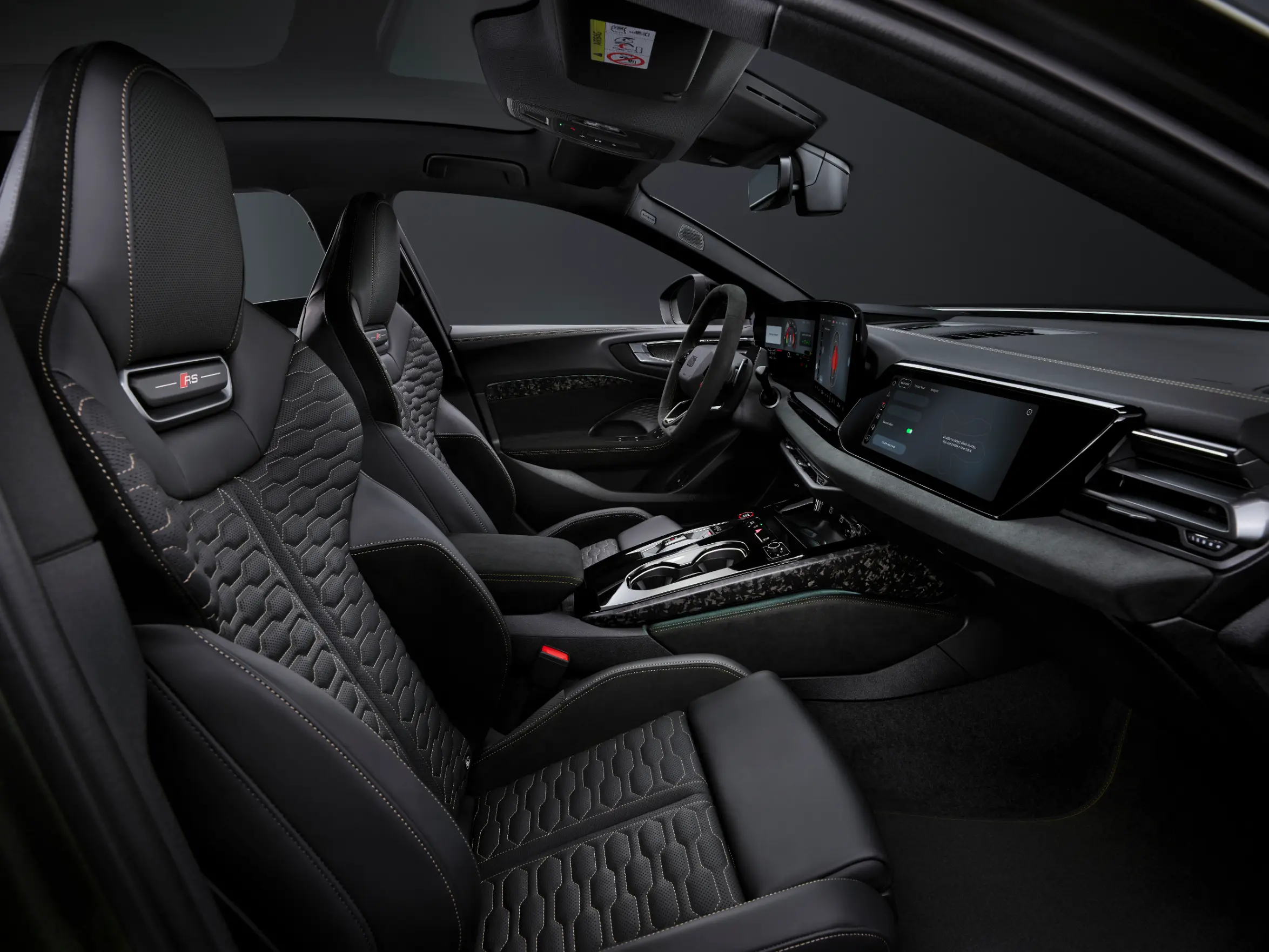
Audi Sport just introduced the new Audi RS 5 as its first high performance plug in hybrid, and the message is clear: electrification is here to add capability, not take away attitude. The new setup blends a twin turbo V6 with electric power for huge system output, plus a brand new quattro layout that is built to sharpen handling in a way Audi calls a production world first. It is designed to switch personalities fast, from quiet electric city driving to full send canyon pace, without feeling like two different cars.
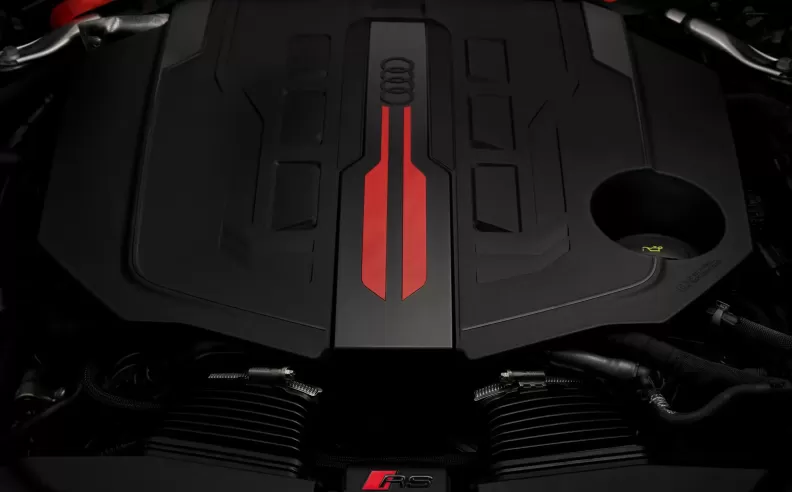
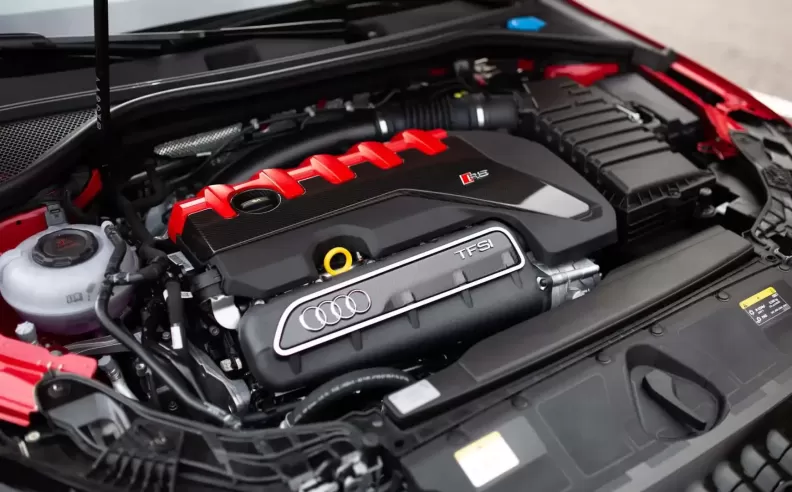
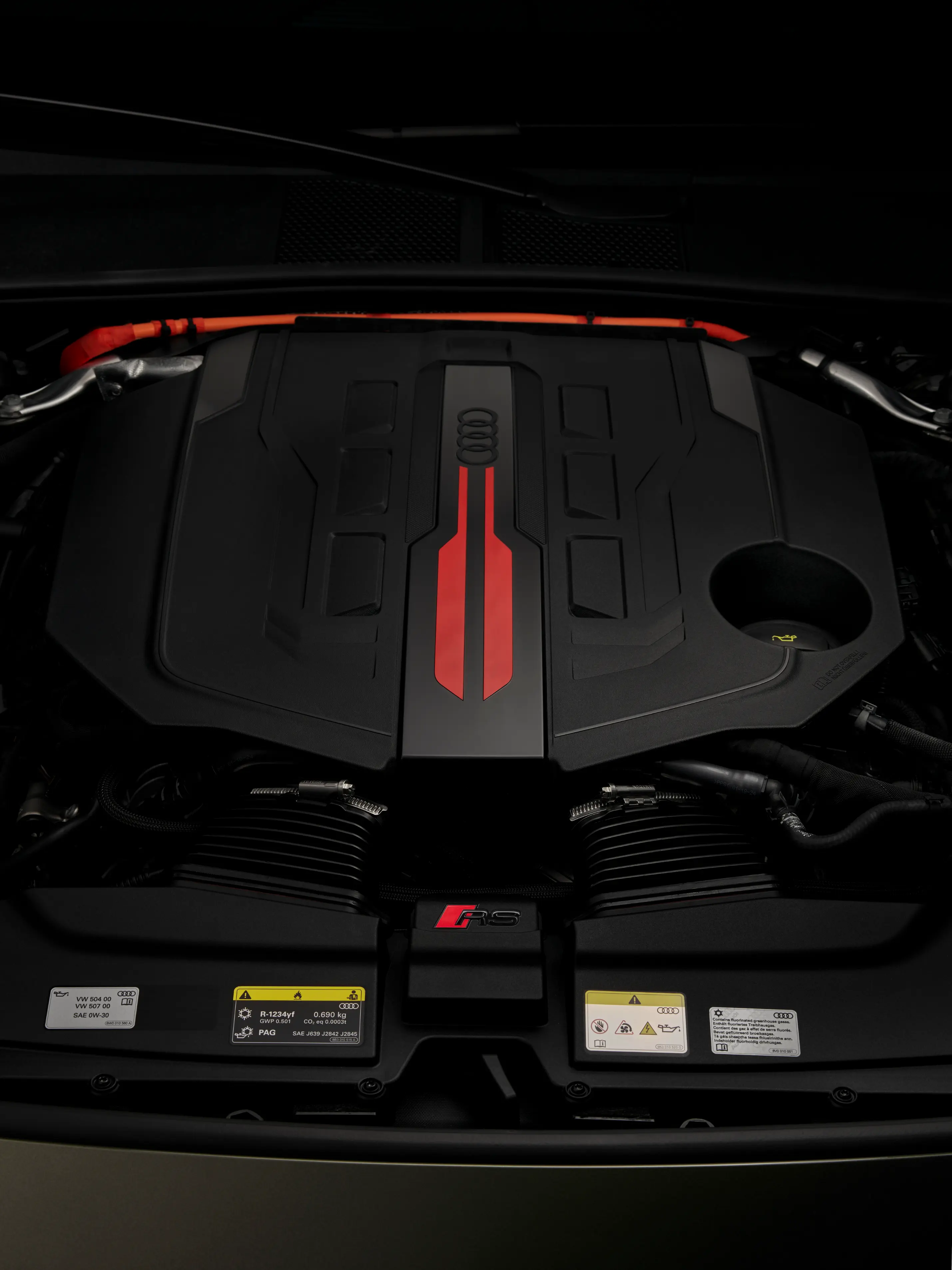
Audi Sport pairs a 2.9 liter twin turbo V6 with an electric motor integrated into an eight speed gearbox. Total system output reaches up to 470 kW with 825 Nm of torque, and Audi says 0 to 100 km/h takes 3.6 seconds. There is also a boost function that delivers maximum acceleration for 10 seconds at the push of a button, aimed at quick overtakes and instant punch.
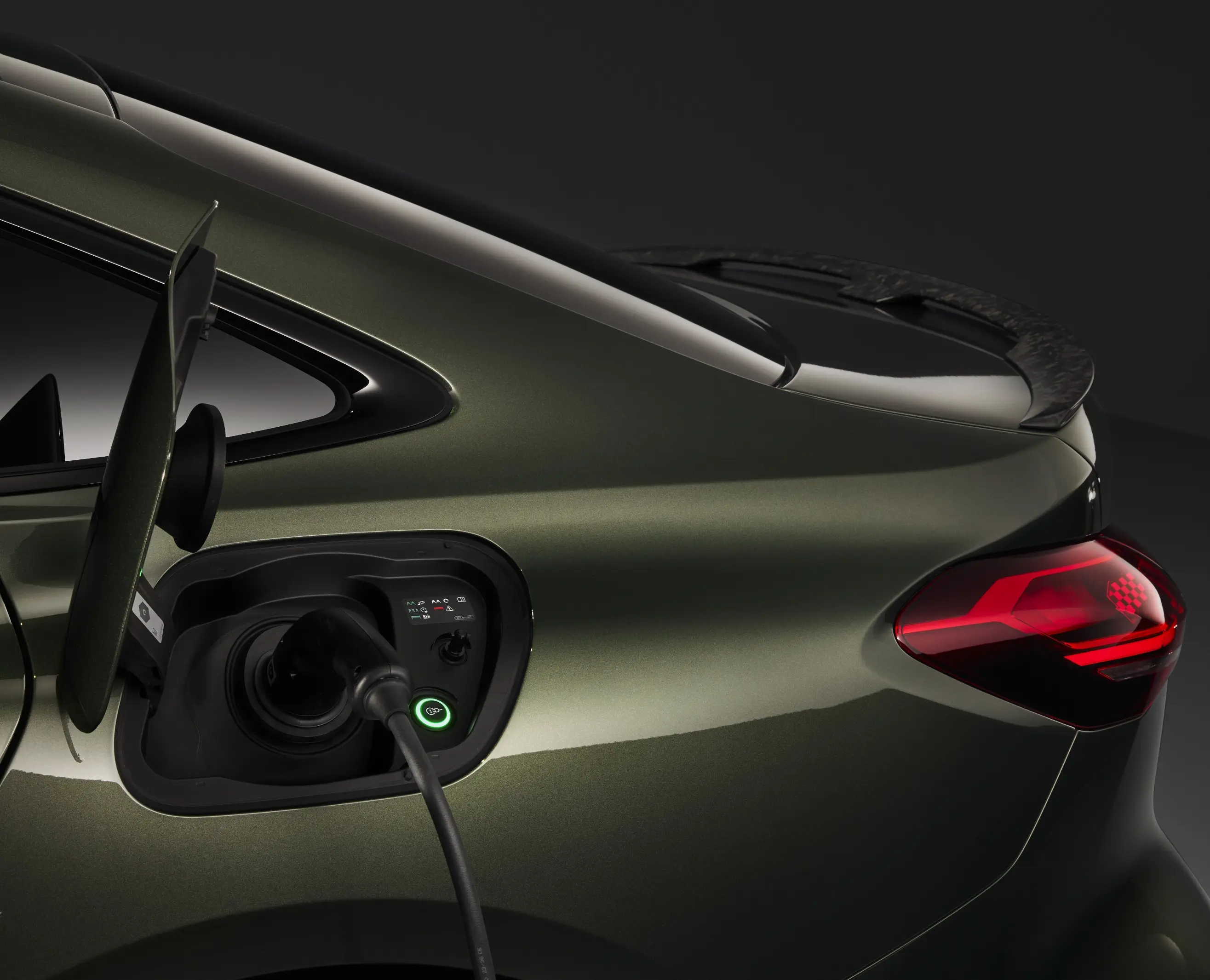
Electric driving is not just a bonus mode here. Audi quotes an all electric range of up to 84 km, and up to 87 km in city driving depending on the cycle. Charging is supported up to 11 kW AC, with a full charge in about 2.5 hours. Audi also highlights smart thermal management that actively targets 20 degrees Celsius battery temperature in the most aggressive RS modes to keep power delivery consistent when you drive hard.
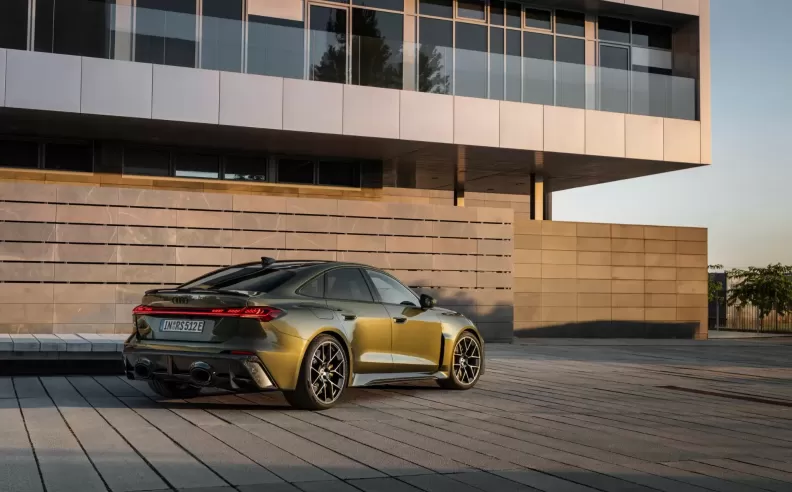
The headline innovation is quattro with Dynamic Torque Control, an electro mechanical torque vectoring system built into a new rear transaxle. Audi says the control unit recalculates the ideal rear wheel torque split every 5 milliseconds, then applies it immediately. The system can create torque differences of up to 2,000 Nm between the rear wheels in about 15 milliseconds, helping the car rotate more eagerly, stay stable when conditions get tricky, and put power down harder on corner exit.
Audi also adds a new center differential with preload, meaning it stays at least partially locked. That helps keep the axles coupled even when you lift off the throttle, improving turn in and reducing internal understeer during weight transfer. The goal is a car that feels agile and precise without becoming nervous, whether you are cruising or pushing.
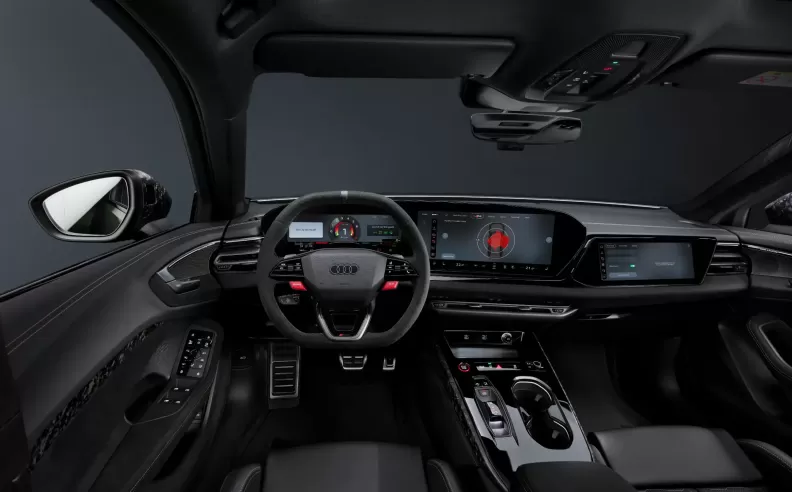
Audi leans heavily on a new RS sport suspension with twin valve dampers that can control compression and rebound independently. That allows the car to feel comfortable on normal roads and still clamp down body motion when the pace rises, reducing pitch and roll with quicker reactions to changing surfaces.
The RS 5 uses five link suspension front and rear, RS tuned steering with a 13 to 1 ratio, and wheels sized 20 inch standard with 21 inch options. Brakes are serious too: steel brakes measure 420 mm front and 400 mm rear, while optional ceramic brakes measure 440 mm front and 410 mm rear. Audi also notes that with ceramic brakes, the RS 5 can stop from 100 km/h in 30.6 meters.
Curb weight is listed at 2,355 kg for the Sedan and 2,370 kg for the Avant, so the chassis tech is doing real work to keep the car feeling quick on its feet.
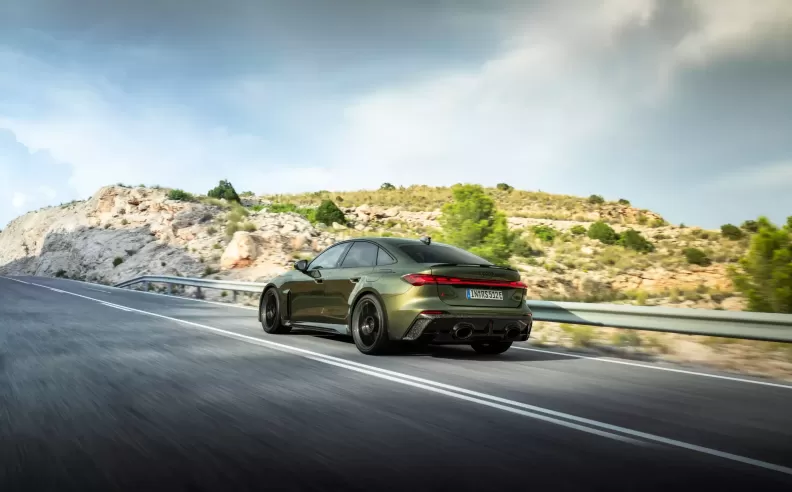
Audi positions the RS 5 as fully loaded on safety tech, and one of the most interesting highlights is the second generation digital OLED rear lights with a communication light feature. Audi says it can warn other drivers, for example near accident and breakdown sites, and it can show additional warning graphics in critical traffic situations. That is a practical safety idea, especially in fast moving highway conditions.
Braking performance is also part of safety, not just speed. The brake by wire system blends regenerative braking with friction braking as needed, and Audi points to a newly tuned ABS software version designed to work tightly with the high performance brake setups. Add strong stability control integration with the steering system, and the RS 5 is designed to feel controllable and predictable even when you drive it like an RS.
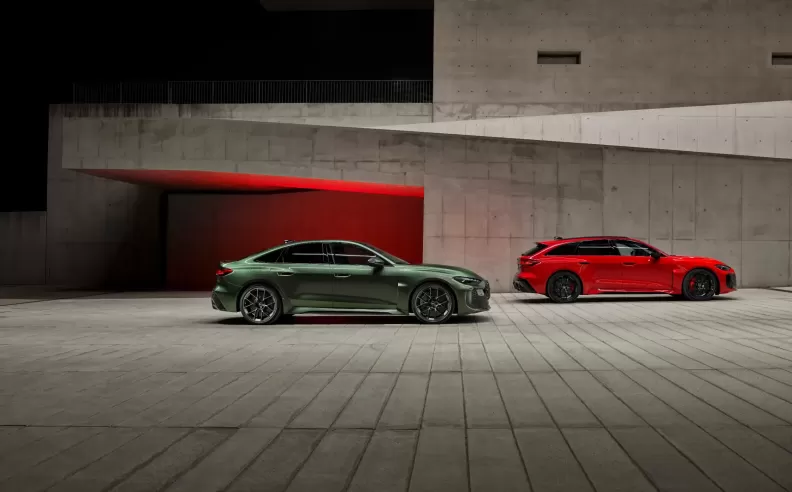
In Germany, Audi lists a starting price of 106,200 euros for the Audi RS 5 Sedan and 107,850 euros for the Audi RS 5 Avant. The models are built in Neckarsulm, with order books for European buyers opening in the first quarter of 2026 and deliveries expected in Summer 2026.
Key powertrain specs look like this:

Started my career in Automotive Journalism in 2015. Even though I'm a pharmacist, hanging around cars all the time has created a passion for the automotive industry since day 1.


 SHARE
SHARE
 SEE FULL GALLERY