By Christian Hertrich
In Formula 1, speed isn’t limited to race day. If it takes you 16 days to print a prototype part, you might have lost the race before the car even hits the track.
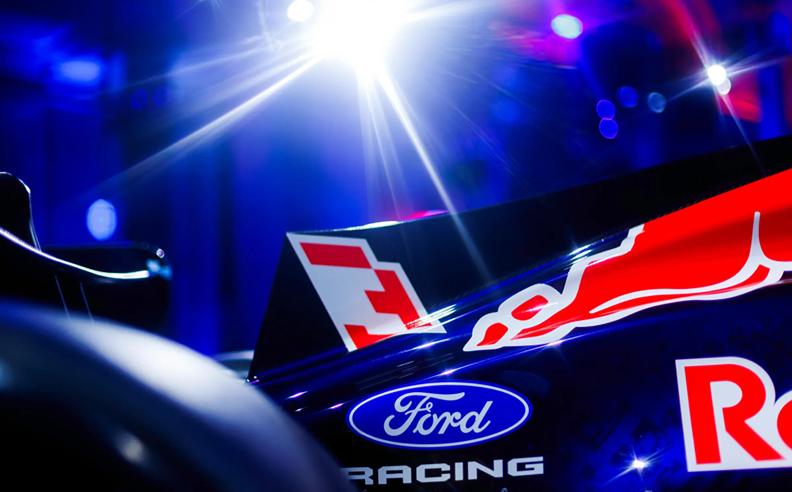
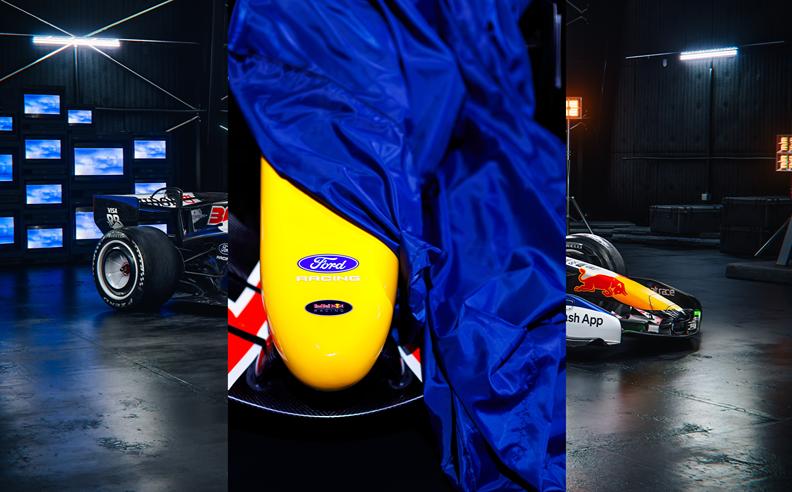
That is why one of Ford’s most immediate contributions to our partnership with Red Bull Powertrains has been in the world of advanced manufacturing. By leveraging our state-of-the-art 3D printing technology, we’ve slashed that 16-day manufacturing window down to just five. When you can refine designs three times faster, you aren’t just engineering — you’re hunting the competition. As the Ford Racing powertrain chief engineer, my challenge is to merge Ford’s 125-year winning culture with Red Bull’s relentless agility and 20-year history of winning. Led by Red Bull, Ford Racing is supporting the build of an F1 power unit from the ground up for the 2026 season, and the pressure is daunting. We are currently fabricating unique, highly complex components for the combustion engine, charge air system, and energy recovery systems — parts that are being refined in real-time between our teams in Michigan and Milton Keynes. But hardware is only half the battle. As newcomers to the 2026 regulations, we are fighting a decades-long experience gap against established manufacturers. We cannot afford to wait for traditional simulations to crunch numbers. To bridge that gap, one of our simulation engineers at Ford Racing, Kevin Ruybal, developed a unique controls model working in partnership with the Red Bull team in Milton Keynes. It runs a staggering 1,000 times faster than real-time. This model has become our primary tool for controls and calibration, allowing our drivers to feel the engine’s behavior in the simulator and provide feedback before the physical hardware even exists. This digital intelligence extends deep into battery energy usage. Engineers like Sam Angeli and Mike Huang are working with Red Bull engineers at Red Bull Ford Powertrains HQ to solve the puzzle of how to deploy electric power in concert with combustion power. Mike has developed a sophisticated tool using dynamic programming that effectively acts as a real-time strategist, advising the system on exactly when to dump or save energy to find the fastest way around the track including energy calibration and drivability. The heat management strategies and state-of-charge calculations we are refining for the 2026 grid are the same building blocks that will eventually allow a future electric Ford truck to tow further and charge faster. We are using the world’s most innovative laboratory to ensure our customers get the innovation they deserve. The road to March 2026 is a massive undertaking, but seeing our embedded engineers working seamlessly in Milton Keynes proves what is possible when two world-class teams unite. We are working night and day to be ready. F1 is the ultimate proving ground, and the Blue Oval and the Red Bull Powertrains teams are ready for the challenge. Christian Hertrich is the Ford Racing Powertrain Chief Engineer.

Motor 283 is the biggest automotive website created by a team of automotive enthusiats and this author page is used to show the readers the press releases and news posted on Motor 283 website.


 SHARE
SHARE