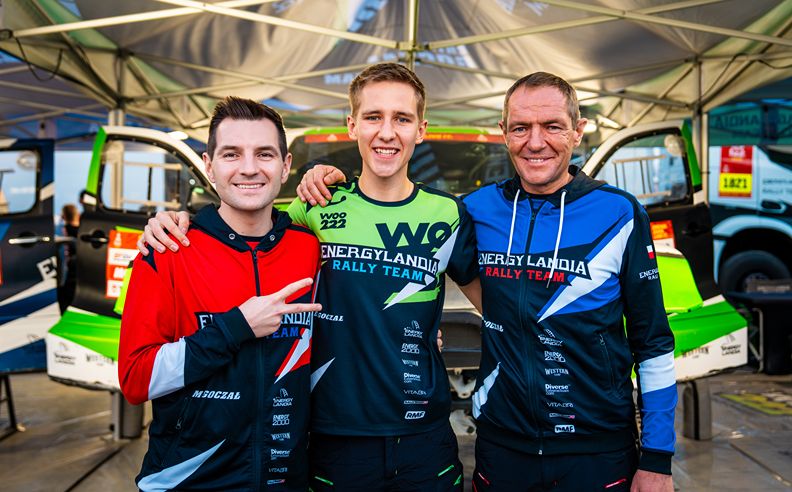
Across a distance of 8,000 kilometers, Dakar Rally Saudi Arabia stands as one of the toughest tests in motorsport. It has also become a place where families unite — fathers, sons, daughters and siblings racing side-by-side — bound by a shared ambition to compete at the limit across the two-week desert marathon.
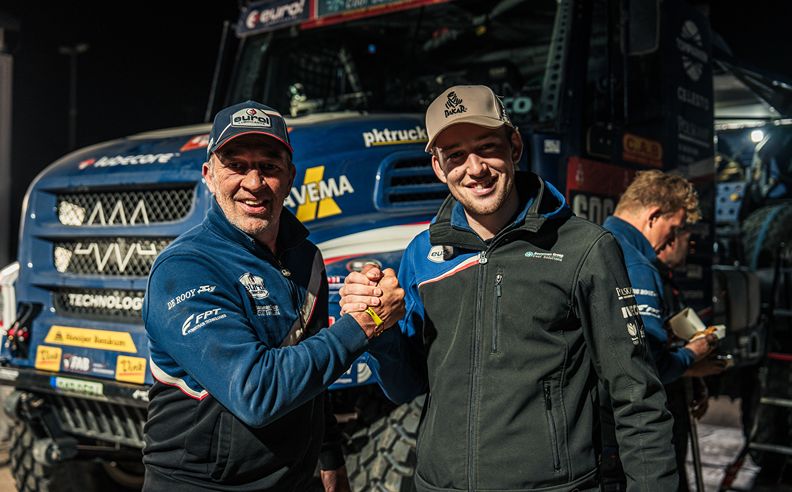
Throughout the bivouac, family ties connect competitors and team-mates across every category, from cars to bikes and trucks, reinforcing the importance of trust and support in a rally where nothing is achieved alone.
Dakar’s unforgiving terrain plays a central role in forging those bonds. Saudi Arabia’s vast deserts, rocky plateaus and constantly shifting conditions create an environment where experience matters, and where knowledge is passed down from one generation to the next in pursuit of success.
Nowhere is that more clearly exemplified than with Saudi Next Gen competitor Hamzah Bakhashab. The 22-year-old is following in the wheel tracks of his legendary father, Abdullah Bakhashab, a Middle East Rally Championship winner in the 1990s and a former WRC competitor.
Hamzah’s route to the Dakar Rally came via the Saudi Next Gen program established by the Saudi Automobile and Motorcycle Federation. After five days of intensive training, he earned a place on this year’s rally, continuing to uphold the Bakhashab name on four wheels.
Forming a tribe
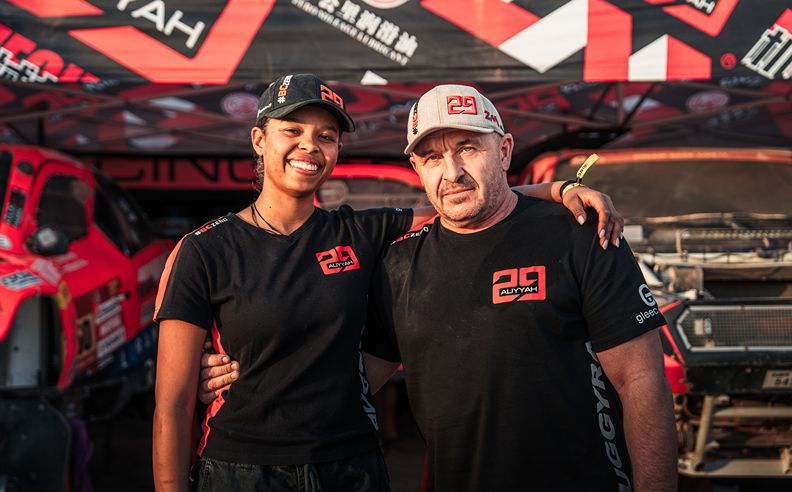
For Czech racer Martin Koloc, 58, the Dakar Rally Saudi Arabia represents something truly rare — an opportunity to compete on equal terms alongside his daughter, Aliyyah. It has been 25 years since Koloc last raced professionally, yet he has returned to the cockpit — for the first time at Dakar — to share the experience with his family.
A two-time European truck champion, Koloc brings decades of motorsport know-how and a deep understanding of Dakar from years working in support roles. This year, however, it is his daughter who arrives with greater Dakar mileage. Aliyyah, 21, is contesting her fourth Dakar Rally, the pair running in Red-Lined Revo T1+ machinery for Buggyra ZM Racing in the Ultimate Class.
The family story runs deeper still. Aliyyah’s twin sister Yasmeen acts as Martin’s race engineer, cousins are embedded within the team, and Martin’s adopted son completes a truly multi-generational operation.
“We are a tribe,” says Martin. “I’m blessed that I can do what I love with my kids. When you share an adventure like Dakar, you give your children a foundation for life — it makes them more resilient.” That resilience was tested when Martin suffered a power steering failure in his two-and-a-half-ton car. “I’m strong, but I was beaten up,” he admits. “The same happened to Aliyyah. She came back with blisters as she didn’t want to give up. That’s when I told her how much I respected her mental strength.”
While Martin offers wisdom built on experience, it is Aliyyah who now guides her father through the unique demands of Dakar. “I’ve been trying to help him, especially when it comes to driving on sand,” she says. “He does listen… sometimes. But our goal is to reach the finish line together. If one of us stops, the other will help.”
Keeping it in the family
Elsewhere across the dunes, similar family dynamics unfold. Brazilian Lucas Moraes returns to Dakar this year as part of the Dacia Sandriders line-up, while his father Marcos Moraes competes separately in a Toyota — both bound by a shared Dakar heritage.
For the Goczał family, Dakar has been a long-term pursuit. Eryk Goczał is the youngest driver ever to win the rally when he claimed T4 honors in 2023. The 21-year-old now competes alongside his brother Michal, and father Marek in the Ultimate category.
“For as long as I can remember, our family has always dreamed of bringing the Goczał name to all three steps of the Dakar Rally podium,” says Eryk. “That remains unchanged, now in the Ultimate category. We’re working hard to make the dream come true.”
In one corner of the bivouac, two neighboring outfits share strikingly similar stories. One is Dutch, the other Czech — both defined by fathers and sons competing in the Truck category. The van den Brink name has been synonymous with Dakar for nearly two decades. Veteran Martin van den Brink once famously contested stages wearing wooden clogs, and now his son Mitchel is following in his footsteps.
“I grew up in the garage,” Mitchel says. “It was my life. I was six when my father started Dakar, and he’s now 55. When I was 16, I raced with him for the first time, initially driving the assistance truck, and now the roles are reversed.”
Parked beside them in the Saudi Arabian wilderness is the Valtr family from the Czech Republic. Michal Valtr, 28, is the son of Dakar stalwart Jaroslav Valtr, who has competed since 2012. In 2024, father and sons raced separately; in 2026, they are reunited under one team structure, with father and uncle guiding the next generation.
“Why are we here? What attracts me to Dakar is the family time,” says Uncle Michal Valtr. “We live hundreds of miles apart and run our own businesses. Dakar gives us a chance to be together.”
“When I was young, I watched my father racing,” adds Valtr Jr. “Dakar has a special spirit that brings families together. Everything I do is because of him. Of course, I want to be the best in his eyes. With my father, mother, brother, uncle, and aunt — we are stronger together.”
At Dakar Rally Saudi Arabia, success is measured in far more than stage wins and final classifications. It is found in shared hardship, in lessons passed down across generations, and in support between crew members. In a rally famed for its isolation and endurance, family has become one of Dakar’s greatest strengths, a reminder that no one truly races alone.
The Dakar Rally Saudi Arabia 2026 is taking place from January 3 to 17, spanning 14 race days and featuring a Prologue and 13 competitive stages. The seventh edition hosted in the Kingdom brings together 787 competitors representing 49 nationalities, competing across 421 vehicles in multiple categories. The field includes 72 Ultimate cars, 45 trucks, 115 motorbikes, 7 Stock vehicles, 37 Challengers, 41 Side-by-Side vehicles, 75 Classic cars, 22 Classic trucks, and six Mission 1000 motorbikes, in addition to one truck, underlining the rally’s international reach and competitive diversity.
Moreover, the new 2026 route promises a challenge worthy of the Dakar name. Each region presents its own rhythm and demands, rewarding those who can adapt and stay focused across two intense weeks. As the rally unfolds, the diversity of the terrain and the scale of competition reflect the enduring spirit of Dakar and the growing role of Saudi Arabia as a defining stage for the world’s toughest rally.
Motor 283 is the biggest automotive website created by a team of automotive enthusiats and this author page is used to show the readers the press releases and news posted on Motor 283 website.


 SHARE
SHARE