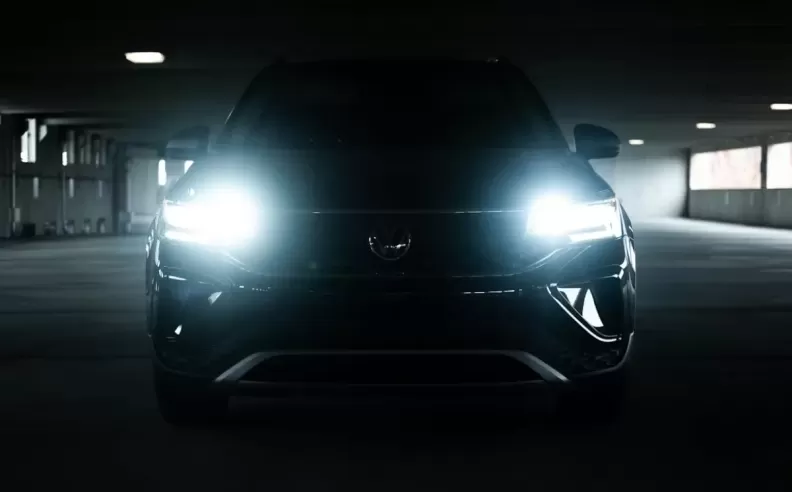
Adaptive headlights are no longer just a luxury feature, they are becoming one of the most important safety technologies in modern cars. With Tesla preparing to roll out matrix based adaptive lighting in North America and brands like Audi pushing micro LED systems to new levels, the conversation is shifting from brightness to intelligence. This is not about stronger beams, it is about smarter light distribution that reacts in real time to traffic, road curves, weather, and even your driving behavior.
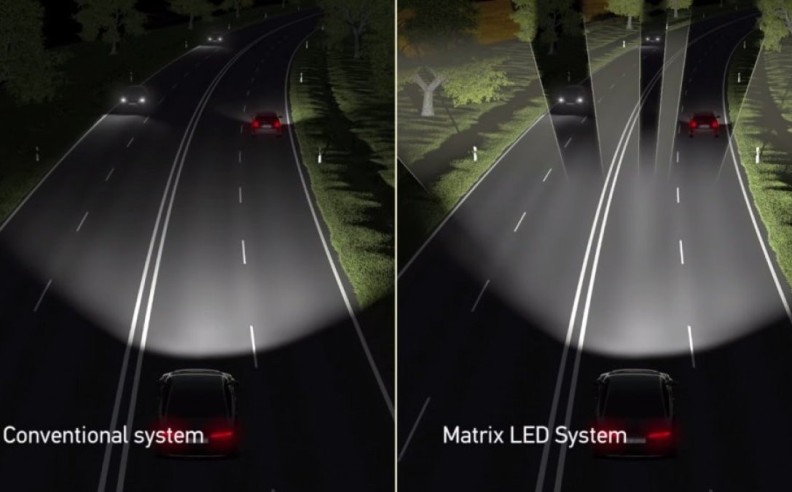
At the core of adaptive headlights is something called a matrix LED system. Instead of one fixed high beam and one fixed low beam, matrix headlights use dozens or even thousands of tiny LEDs that can be controlled individually. Each LED acts like a pixel in a screen, allowing the car to shape and adjust the light pattern dynamically.
When cameras and sensors detect oncoming traffic or vehicles ahead, the system instantly dims or switches off only the specific LEDs that would shine directly into another driver’s eyes. The rest of the beam stays bright. This means you effectively drive with high beams on almost all the time, but without blinding anyone.
Tesla’s matrix headlights, introduced in software update 2024.2 outside North America, rely on this pixel style control. Vehicles produced after early 2023 typically include the hardware needed for this feature, and once regulatory approvals align, the system can be activated through a software update. That is the key difference compared to traditional lighting systems. The intelligence lives in software, not just hardware.
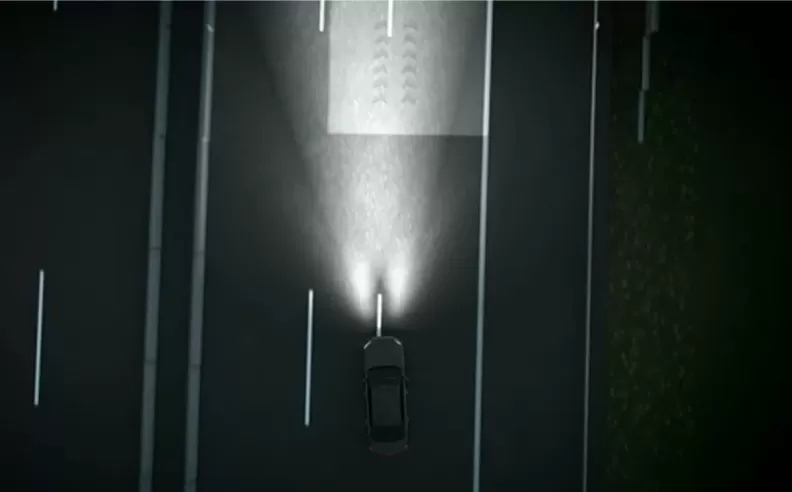
Audi takes the concet even further with its Digital Matrix LED system. Each headlight contains two projectors and around 25,000 micro LEDs per unit. These micro LEDs are incredibly small, roughly half the thickness of a human hair. With that level of precision, the system does more than avoid glare. It can project visual guidance onto the road itself.
For example, as you approach a curve at night, the system reads lane markings using cameras and then projects guiding arrows onto the pavement ahead of you. If you drift toward a lane edge, visual cues appear directly on the road surface. In some scenarios, the headlights can even warn you about vehicles in your blind spot by displaying a light pattern in your path.
This is lighting that thinks, analyzes, and communicates.
The biggest benefit is glare reduction. Traditional high beams create a simple choice: either see far ahead or avoid blinding others. Adaptive systems remove that compromise. They provide maximum forward visibility while carving out shadow zones around other cars. That dramatically improves nighttime safety for everyone on the road.
Night driving remains one of the most dangerous conditions due to limited visibility and delayed reaction times. By automatically adjusting beam height, direction, and intensity, adaptive headlights extend the driver’s visible range without increasing risk for surrounding traffic.
Regulation has been the main barrier in some markets. While Canada approved adaptive headlight use years ago, U.S. regulations only recently allowed the technology, and strict wording still limits how some systems operate. That is why manufacturers like Tesla are preparing region specific software calibrations before full rollout. Rivian has already launched compliant adaptive lighting in the United States, proving it can be done within regulatory limits.
From a safety rating perspective, this technology also matters. Advanced lighting improves visibility scores in crash testing evaluations and contributes to higher overall safety ratings. As automakers chase better ratings and stronger consumer trust, adaptive headlights move from being a luxury feature to a competitive necessity.
Beyond safety, there is also a quality of life factor. Drivers are increasingly frustrated with harsh LED glare from modern vehicles. Adaptive systems directly address that complaint by intelligently managing beam spread. Instead of flooding the road with uncontrolled brightness, they create controlled illumination that adapts to real world conditions.
The future of lighting is clearly digital. As more vehicles integrate camera systems, artificial intelligence processing, and software defined updates, headlights become another smart system in the vehicle ecosystem. What used to be a simple bulb is now a precision controlled safety tool.

Started my career in Automotive Journalism in 2015. Even though I'm a pharmacist, hanging around cars all the time has created a passion for the automotive industry since day 1.


 SHARE
SHARE