Toyota just brought real autonomy to one of the busiest airports in Japan. At Tokyo Haneda Airport, autonomous towing tractors are now starting regular baggage and cargo runs in a restricted airfield zone. The project began as an announcement in March 2021, then moved into trials in October 2021, and it has kept evolving through a partnership involving Toyota Industries Corporation and All Nippon Airways. Now the tech is stepping out of the test phase and into daily operations, with more units scheduled to join soon.
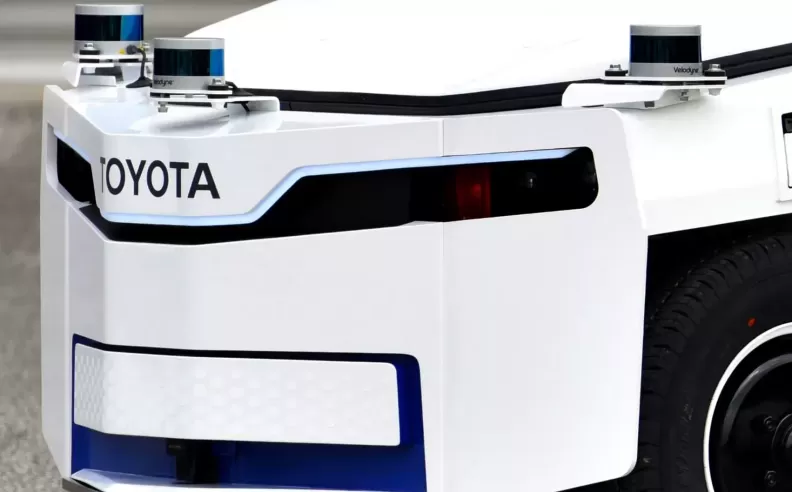
Toyota is putting autonomous towing tractors to work moving baggage containers and cargo dollies between aircraft and terminals at Haneda. Toyota is using Level 4 autonomous capability for these runs inside the restricted airport area, which makes this rollout a big leap from earlier Level 3 airport trials that have been happening in Japan since 2019. Toyota is leaning on a sensor heavy setup that includes LiDAR positioned around the vehicle to support localization and obstacle detection, while a remote monitoring team can step in when conditions get complex near active runways and busy service lanes. Toyota is also keeping speed conservative in autonomous mode, topping out at 15 km/h while towing up to 13 tons, which fits the reality of crowded ground operations where safety and predictability matter more than speed. Toyota is also confirming that the same tug can run in manual mode too, where it can reach 25 km/h and tow up to 27 tons, giving airports flexibility when they need it.
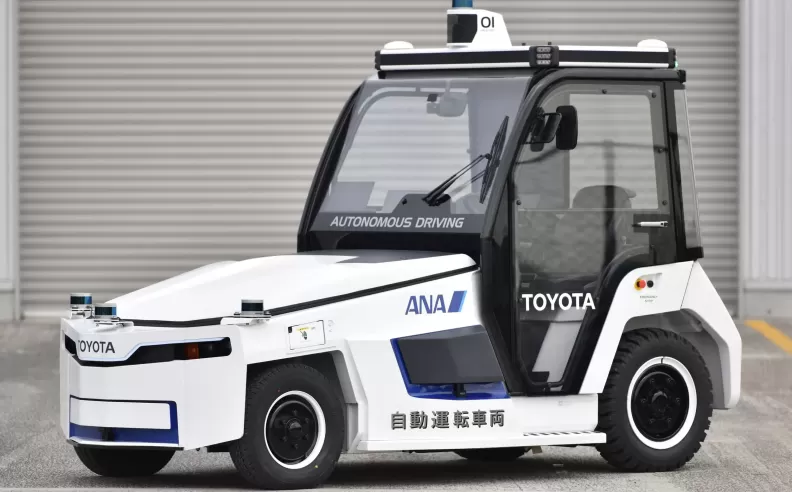
Toyota is not just dropping autonomous vehicles onto the tarmac and hoping for the best. Toyota and ANA are rolling out a Fleet Management System that sends dispatch instructions, assigns lanes for departures and arrivals, and connects with the airfield traffic light system. Toyota is designing the system around a real working route of about 1.5 km that links terminal areas with the cargo shed, and the tug is expected to recognize and react to traffic signals along the way in sync with the new platform. Toyota is basically building an organized, controlled flow for ground vehicles so movement stays predictable and delays get reduced. Toyota is also scaling the deployment in phases, with three autonomous towing tractors starting work in December 2025 and another three expected to join by the end of March 2026, which signals this is meant to be a long term operational shift, not a short demo.

Started my career in Automotive Journalism in 2015. Even though I'm a pharmacist, hanging around cars all the time has created a passion for the automotive industry since day 1.



 SHARE
SHARE